
Category: Hot Water

  • Lifespan Guide for Queensland Hot Water Systems

    Lifespan Guide for Queensland Hot Water Systems

    Hot water systems play a crucial role in ensuring that you always have access to hot water for your daily needs, such as bathing, cooking, and cleaning. However, just like any other household appliances, they do have a finite lifespan. Being aware of the signs that suggest your hot water system is due for replacement is paramount in preventing inconvenient situations like cold showers, the risk of water damage, and costly emergency repairs that could disrupt your daily life. Taking proactive measures can save you time and money in the long run.

    What is the expected lifespan of your hot water system? The longevity of these systems can greatly differ based on the specific type you own and the level of maintenance it receives. By conducting regular inspections and providing proper care for your system, you can notably extend its operational life while ensuring it performs consistently and efficiently, thus safeguarding your comfort.

    Let’s explore the various types of hot water systems in detail for a better understanding of their lifespans and characteristics.

    Creektocoast Hot Water Install

    Discover the Lifespan and Performance of Various Hot Water Systems

    Here’s what you can typically expect regarding the lifespan and efficiency of the most common hot water systems found in Queensland homes:

    Electric Storage Hot Water Systems

    • Expected Lifespan: 8–12 years
    • Common Causes of Failure: Frequent issues include internal corrosion, aging anode rods, and sediment buildup, which can severely impede performance.
    • Warning Signs to Watch For: Stay alert for rusty or discolored water, leaks around the base of the unit, or slower heating times, all of which may indicate significant underlying problems.

    Gas Storage Hot Water Systems

    • Expected Lifespan: 8–12 years
    • Common Causes of Failure: Similar to electric models, these systems may also face issues; however, they can fail sooner, especially if they encounter salty coastal air.
    • Warning Signs to Watch For: Look for pilot light issues, lower water temperatures, or unexpectedly high gas bills, which could indicate inefficiency and require attention.

    Instant Gas Hot Water Systems (Continuous Flow)

    • Expected Lifespan: 10–15 years
    • Reasons for Longevity: The absence of a storage tank significantly diminishes the chances of corrosion, allowing these systems to maintain optimal performance over time.
    • Warning Signs to Watch For: Be vigilant for inconsistent water temperatures, ignition failures, or a noticeable drop in water flow rate, which may indicate that servicing is needed.

    Electric Instant Hot Water Systems

    • Expected Lifespan: 10–15 years
    • Common Issues: Problems can often arise from malfunctioning heating elements or thermostats, which can significantly hinder performance.
    • Warning Signs to Watch For: Noticeable fluctuations between hot and cold water or longer heating times can indicate underlying issues that need to be addressed.

    Heat Pump Hot Water Systems

    • Expected Lifespan: 10–15 years
    • Efficiency Features: These systems are highly energy-efficient but may be sensitive to climate conditions and their installation location, which can impact overall performance.
    • Warning Signs to Watch For: Watch for signs like louder than normal operation, extended heating cycles, or rising energy bills, which may indicate a need for inspection and maintenance.

    Solar Hot Water Systems

    • Expected Lifespan: 15–20+ years for solar panels, 8–12 years for the storage tank
    • Important Note: Typically, the storage tanks wear out before the solar collectors, which can affect the overall system’s performance and efficiency.
    • Warning Signs to Watch For: Be vigilant if your water fails to heat adequately on cloudy days, or if you notice rusty water or issues with the booster operations.
    Request A Quote

    CALL 1300 793 962

    Heat Pump Installation

    Identify the Key Warning Signs of a Failing Hot Water System

    Even before your hot water system reaches its anticipated lifespan, it may start to show early warning signs indicating that it is under stress. These concerning indicators include:

    • Fluctuating Temperatures
      If your water takes longer to heat up or runs out more quickly than before, it is advisable to investigate further.
    • Rusty or Discolored Water
      This often signals corrosion within the tank or a failing anode rod, both of which require immediate attention to avert further damage.
    • Unusual Noises
      Popping, gurgling, or banging sounds during the heating cycle frequently indicate sediment buildup within the tank, which can significantly affect efficiency.
    • Leaks or Pooling Water
      Even a minor drip can suggest that your tank may be cracking or that the valves are starting to fail, necessitating prompt inspection and repairs.
    • Higher Energy Bills
      An aging unit often struggles to produce the same amount of hot water, forcing it to work harder and resulting in increased energy costs that could impact your budget.

    Understanding How Seasonal Changes Affect Hot Water System Efficiency

    In Queensland, the transition from warm to cooler months can pose significant challenges for older hot water systems. As outdoor temperatures drop, these systems need to work harder to maintain the desired water temperature, and those that are approaching the end of their operational life may experience complete failure during this critical period, leaving you without hot water when you need it most.

    Recognizing When It’s Time to Replace Your Hot Water System

    If your system exhibits any of the following characteristics, it may be time to consider a replacement:

    • Over 10 years old
    • Frequently experiencing breakdowns or inefficiencies
    • Failing to meet your household’s hot water needs
    • Exhibiting visible signs of wear or corrosion

    If you notice these indicators, it might be the right time to upgrade your system for improved performance and reliability.

    At Creek to Coast Plumbing, we go beyond just replacing your unit; we thoroughly evaluate various factors such as your family size, water usage habits, energy preferences, and the layout of your property. This comprehensive assessment allows us to recommend the most efficient and cost-effective hot water system tailored specifically to meet your unique needs.

    Local Plumbers10

    Making an Informed Choice: Selecting the Ideal Hot Water System for Your Home

    Based on your individual requirements and household dynamics, our expert team may suggest:

    • Electric or Gas Storage systems for their reliability and cost-effectiveness, particularly suitable for traditional homes.
    • Continuous Flow (Instant) systems ideal for smaller homes or households with lower hot water consumption needs.
    • Heat Pumps that provide substantial energy savings, especially beneficial in warmer climates.
    • Solar Hot Water systems designed for long-term cost savings and environmental sustainability, promoting a greener lifestyle for eco-conscious households.

    Additionally, we assess whether the current location of your hot water system is optimal or if relocating it could enhance performance, efficiency, and convenience for your household.

    Seize the Opportunity for a Hot Water System Upgrade

    Replacing your hot water system at the optimal time is not solely about preventing system failure; it also presents an invaluable opportunity to upgrade to a more reliable, energy-efficient model that is better suited to your lifestyle and specific needs.

    If your unit is showing signs of aging or if you are uncertain about which system would be best for your home, the licensed plumbers at Creek to Coast Plumbing are ready to provide you with expert assistance tailored to your unique situation, ensuring you make a well-informed decision.

    Request A Quote

    CALL 1300 793 962

    The Article: Hot Water System Lifespan: A Guide for Queensland Homes first appeared on https://writebuff.com

    The Article Hot Water System Lifespan Guide for Queensland Homes Was Found On https://limitsofstrategy.com

  • Thermal Store – Mains Pressure Hot Water Performance

    Thermal Store – Mains Pressure Hot Water Performance

    Thermal Store – Mains Pressure Hot Water Performance Without the Restrictions of Unvented Cylinders

    Thermal Stores have been a successful and extremely efficient hot water solution in the UK for about 40 years, and many installers prefer them to unvented cylinders. It’s not surprising that it’s often easier to just replace what’s there or revert to what you know best.

    However, thermal stores are becoming more popular, owing to the fact that they avoid many of the issues that installers have with unvented cylinders, as well as the hidden costs of installation that are seen as “just part of the job.”

    So, why are so many installers considering using a thermal store to simplify the installation process and improve the completed solution with a fit-and-forget hot water solution?

    Sometimes it is done out of necessity. For example, when turning commercial premises into private apartments and a mains pressure hot water solution is needed, the discharge pipe required by G3 of the building regulations for unvented systems is practically impossible to create. In other cases, such as when integrating renewable energy sources or the cylinder/tank has to be placed in a particular area of the home where space is restricted, it demonstrates to be the best option for the project.

    It simply makes life simpler for knowledgeable installers by providing a fit-and-forget solution that is easier to install and does not need regular maintenance.

    Turning the Traditional Approach Around

    Thermal Store

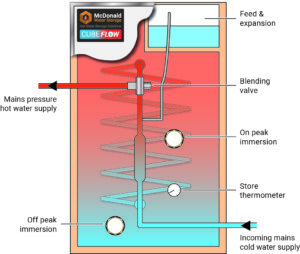
    But how does thermal storage work?

    Thermal storage’s ability to offer mains pressure hot water while requiring no continuing yearly maintenance makes it a perfect choice for unvented units for end users, housing associations, and landlords.

    This is performed by reversing the standard hot water method.

    Instead of storing hot water under pressure in a cylinder and then using it for taps and showers as needed, the thermal store works more like a battery, storing energy from any fuel source when it is cost-effective and then providing hot water and heating as needed in an inherently safe open vented store.

    The cold water from the mains is sent via the incredibly efficient internal coil to generate mains pressure hot water. Because the hot water is made instantaneously and not stored, there is no danger of legionella.

    Another benefit of thermal storage over unvented systems is that domestic hot water is combined at the unit to provide the optimal temperature of around 52 degrees Celsius when delivered to the taps and showers.

    To provide warmth, the stored water is cycled via the underfloor heating system or wet central heating system.

    Making the Installation Process Easier

    https://mcdonaldwaterstorage.com/products/thermal-store/

    Because the system is not pressurized, it acts similarly to a vented cylinder and so gives various additional advantages to installers in terms of simplifying installation.

    The flexibility to position the thermal storage anywhere on the property eliminates the need for sophisticated discharge pipework and the consequences of screeding the pipework under the floor, which is necessary to provide the requisite fall prior to discharging into a high-temperature soil stack. This makes them an excellent alternative for apartment complexes or projects converting commercial office buildings into private houses since it allows for the distribution of mains pressure hot water throughout the property.

    Furthermore, regardless of whether the need is tall, short, fat, or thin, the thermal storage may be designed as a completely customized solution, not only in terms of tapping points but also overall dimensions. Thermal storage is distinguished by the additional flexibility of mains pressure hot water supplied by a cube design tank, which means the area required may be decreased by 25% compared to the same cylinder capacity.

    All of this suggests that installers will almost probably be able to install a thermal store in the existing space or enable homeowners to transfer the hot water solution to the attic to free up closet space.

    Because thermal storage is not pressurized, it does not fall under G3 of the building code and so does not need G3 certification for your installation.

    Making the Most of Low-Cost Energy

    In these times of rising energy prices, it is vital to adopt a system that provides for the lowest operating costs feasible. When energy is available at a lower cost, such as off-peak electricity, thermal storage is generally recognized as the best option for using it. Furthermore, integrating several renewable energy sources might result in a really efficient solution, such as using solar to capitalize on energy generated during the summer months and a solid fuel stove to supply power during the colder winter months.

    A thermal store is a perfect solution for both installers and homeowners due to its unique ability to catch energy as it is made, store it until it is required, and then turn the heat into heating and hot water on demand.

    About Mcdonald Water Storage

    McDonald Water Storage is a major producer of hot water systems in the UK, with an unrivaled reputation for quality and service. As a privately owned, independent hot water tank manufacturer, we are devoted to providing a flexible service that meets the demands of the present economic situation.

    This is evident in our vast product line and our ability to tailor any cylinder to your specific requirements, whether it’s a one-off customized cylinder or a major contract that would benefit from custom diameters or connectors for simplicity of installation.

    We have unparalleled expertise in designing and constructing hot water cylinders for renewable energy sources. Architects, engineers, specifiers, and installers often rely on our experience to guarantee that the most effective and efficient cylinder is provided.

    While copper remains our preferred material because to its greater heat transmission, environmental advantages, and antibacterial qualities, we also offer stainless steel unvented cylinders for applications with limited budgets.

    Quality is still at the heart of all of our efforts, from the material quality to the systems and procedures we use. We have a quality system that meets BSEN ISO 9002. The STEELflow and POWERflow unvented system ranges are also WRc (Water Research Council) certified.

    If you would like to understand our values, aims and objectives for the coming year, along with an insight into what we do and our background, click here to download our latest Business Plan.

    The post Thermal Store – Mains Pressure Hot Water Performance appeared first on https://richcitations.org

    The post Thermal Store – Mains Pressure Hot Water Performance appeared first on https://gqcentral.co.uk