Category: Mental Health

  • Why Is Your Phone Harming Your Brain?

    Why Is Your Phone Harming Your Brain?

    Why your phone is damaging your brain

    Do you have a phone addiction? If this is the case, you are not alone. It’s challenging to go a day without utilizing some technological gadget in today’s environment. According to an app that measures phone usage, we look at our phones an average of 58 times daily. This is causing brain damage. While there are several advantages to utilizing technology, there are also certain risks associated with excessive use. The damage that phone addiction may bring to our brains is one of the most frightening.

    People, like any addiction, tend to use their phones more and more and then find it difficult to stop. Constantly carrying our phones might cause anxiety if we leave them at home or in the car by accident. Smartphone separation anxiety has been discovered as a serious source of stress that can trigger dread and fear of missing out. It stems from our increasing reliance on our phones for communication, information, directions, and reminders of what we are meant to accomplish that day. Nomophobia, or the dread of not always having our phone with us, has been given a name. Furthermore, concerns about a low battery, insufficient data or credit, and inadequate network coverage have prompted anxiety and even panic attacks.

    We live in an age of immediate pleasure. As a result, another type of anxiety associated with smartphone use is the feeling you get when you send a message to someone and they don’t respond right away or when there aren’t enough “Likes” or comments on your newest social media post. On the other side, you have the impression that you should answer communications immediately but don’t want to. This might generate anxiety as a result of guilt. All of this may seem trivial, but it produces worry in many individuals, which has harmful repercussions on the brain.

    neurons

    Over half of all eleven-year-old American youngsters own a smartphone. This is alarming since by age twelve, youngsters use their phones for slightly under five hours per day, rising to more than seven hours per day in teens. The first thing that comes to mind as a source of concern is that these children are playing games on their phones than outside. Physical activity promotes brain health, improves mood, attention, and concentration, and increases energy. When we use our cell phones, we tend to hop from one activity to the next, from one screen to the next, and from one program to the next. A study of this loss of attention when using cell phones discovered that it damages brain growth. Furthermore, excessive screen usage might cause the brain’s outer layer to thin. This brain damage was discovered in the preliminary findings of research that followed the smartphone use of 11,000 youngsters for a decade. Observing how much damage these children’s brains have sustained after 10 years will be intriguing.

    In addition to worry, phone addiction can result in sleep deprivation, depression, transient memory loss, headaches, dizziness, and exhaustion. All of these things can harm the brain or impair its function.

    Mobile phones prevent us from concentrating correctly. We insist on having them around so that even while we are working or attempting to focus on anything else, we are disturbed if we hear an alert. We wonder who has messaged us, what is going on on social media, and whether we have an email that has to be answered. According to one research, even when we are not using our smartphones, they demand our attention and make us uneasy.

    Using a cell phone also promotes mental laziness. It’s tempting to “Google” anything when you want to learn something new. This, however, does not allow you to exercise your grey matter. “Use it or lose it,” as the old adage goes.

    Smartphone use can potentially harm our brains by causing sadness. We only post good events and news on social media. We may also use technology to apply filters to our images to make us appear immaculate. This, however, might be interpreted as living a great life, looking stunning, and loving every second of it. When people view these messages on a regular basis, it can make them feel inadequate, diminish their self-esteem, feel lonely, and feel as if they are missing out, all of which can contribute to depression. Worryingly, smartphone internet use can drive people, particularly adolescents, to self-harm or even commit suicide. This is a very concerning component that has the potential to harm the brain by creating psychological and emotional anguish. Having said that, one research found that being sad actually pushes people to utilize social media to seek validation in the form of likes or comments.

    The Dangers of Blue Light

    We’ve all heard that excessive screen time is hazardous for our eyesight. But did you know that the blue light emitted by screens can also be harmful to our brain health? Blue light is a kind of light wave generated by mobile phones and other devices with screens, such as laptops, tablets, and televisions. Some blue light exposure can really be advantageous since it can help us stay alert. However, too much of it might be harmful to our brains.

    Blue light can have a deleterious influence on the brain function in a variety of ways. For starters, blue light has been proven to inhibit melatonin synthesis, a hormone that helps regulate our sleep cycles. This implies that exposure to blue light before bedtime might make it considerably more difficult to fall asleep and sleep well. Inadequate sleep can impair the brain’s focus, mood, response time, and memory. Blue light has also been found to raise cortisol levels, the stress hormone. This, along with sleep disruption, can result in feelings of worry and even sadness.

    So, how do you shield your brain from blue light? You may prevent blue light on your phone by downloading applications or purchasing specific coverings to place on the phone screen. If you use spectacles, request that your optician apply a blue light filter to the lenses. You may also get non-prescription blue-light-blocking glasses.

    It is critical to be aware of the hazards and make efforts to decrease your phone usage. Here are some suggestions for detoxing from your phone addiction while still protecting your brain.

    Limit your screen time.

    Limiting your screen time is one of the most effective methods to lower your chances of acquiring a phone addiction. Set aside specified times of the day when you are not permitted to use your phone. This might imply putting it away between meals or before going to bed. You might also try setting and sticking to a daily limit for yourself. Using an app like Rescue Time will allow you to see how much time you spend on your phone. Put yourself in command of your phone rather than the other way around.

    Take breaks from your phone.

    It’s also crucial to take phone breaks throughout the day. This will assist you in avoiding getting overly dependent on it and will allow your brain to relax. Try searching for information in a book rather than on the internet, or solving a crossword puzzle rather than playing an online game.

    Only use your phone for specific tasks.

    When you do use your phone, make an effort to be deliberate about it. Use it for specific activities and then put it away when finished. This will prevent you from wasting time reading through social media or playing games when you could be doing something else. This will be made easier if you delete social media from your phone. You must then log into your laptop to check it.

    Be mindful of your phone usage.

    It’s also critical to be aware of how you’re using your phone. Are you utilizing it to remain in touch with loved ones or escape your life? If you find yourself using your phone in harmful ways, it may be time to reduce your usage. Rather than communicating with your friends and family over social media, go see them in person.

    Mobile phones have a place in society and appear to be here to stay. However, you should be aware of how much time you spend on your phone. Although old age may seem far away, using your phone excessively when you are young might have major consequences for your brain’s health. You’ve been forewarned!

    References


    The post Why Is Your Phone Harming Your Brain? appeared first on https://gqcentral.co.uk

  • Psychologist Explains Parenting Connections Between Mobile Devices And Anxiety Albany NY

    Psychologist Explains Parenting Connections Between Mobile Devices And Anxiety Albany NY

    Local business owners understand mobile devices’ impact on commerce and customer service. As parents, we have undoubtedly observed the influence on teen and preteen mental health. Local psychologists in your region may be able to provide valuable guidance and therapy to assist your parenting and your teen or preteen kid in dealing with the social pressures that come with mobile device use.

    The Impact of Mobile Devices and Social Media on the Mental Health of Teens and Preteens

    Academic psychologists who deal with parents to help them cope with the pressures of modern life have personal knowledge of the influence that mobile devices and social media may have on the mental health of teenagers and preteens. On the one hand, these technologies have the potential to give an abundance of knowledge as well as chances for connection and conversation. They can, however, lead to feelings of loneliness, worry, and low self-esteem.

    The Upsides of Mobile Devices and Social Media

    One of the most significant benefits of mobile devices and social media is their capacity to connect individuals, particularly those who may feel alienated or lonely in their offline life. Social media may provide teenagers and preteens a feeling of community and belonging while also allowing them to keep in touch with friends and relatives who may live far away.

    Aside from the social elements, mobile devices and social media allow instant access to a wealth of information and services. These technologies may be used by students to perform research for school projects, stay up to date on current events, and find their hobbies and interests.

    The Downsides of Mobile Devices and Social Media

    Mobile gadgets and social media can have both beneficial and bad effects on teenagers’ and preteens’ mental health. Psychologists and parents alike have highlighted social media’s influence on body image and self-esteem as a key source of worry. With a steady stream of highly crafted, and sometimes unrealistic, pictures and impressions drawn from social media platforms, it is easy for young people to compare themselves to others and feel inadequate while witnessing their peers’ participation and obtaining Likes.

    Social media can lead to feelings of anxiety and FOMO (fear of missing out) in teenagers and preteens during their critical social adjustment era, in addition to its effect on body image. Constant alerts and the pressure to stay connected can lead to feelings of stress and apprehension about missing important events or social engagements.

    The possibility of their adolescent or preteen kid being cyberbullied or harassed online can also overwhelm parents. While anonymity on the Internet allows people to say things they would not say in person, it may also lead to the spread of nasty and cruel comments. This can have serious consequences for the targeted individual’s mental health, including anxiety, despair, and even suicide ideation.

    Get Help From A Licensed Psychologist Who Is Mindful Of This Parenting Challenge

    As a culture, we have become increasingly reliant on social media for communication, entertainment, and connection. While social media offers numerous benefits, a growing body of evidence suggests that it can also have harmful consequences on mental health, especially among adolescent girls.

    According to a review of the evidence conducted by the American Psychological Association, teenage social media use has been associated to elevated levels of anxiety and depression. Girls tend to be more susceptible to the harmful impacts of social media than guys.

    One explanation for this might be because females and boys utilize social media in different ways. Girls are more likely to use social media to show themselves to others and seek acceptance and validation, which can lead to anxiety and low self-esteem if these needs are not satisfied. Girls are also more likely to be victims of cyberbullying and online harassment, which can have major effects for their mental health.

    Girls’ anxiety may be exacerbated by the need to project a flawless picture on social media. Many girls feel compelled to keep their social media profiles up to date and portray a highly managed image of their life, which can be taxing and lead to feelings of inadequacy if they fall short of these expectations.

    There is also data that shows that continual social media exposure might lead to a lack of face-to-face social connection, which is necessary for the development of social skills and emotional well-being. Girls who spend too much time on social media may lose opportunities to develop these abilities, leading to feelings of isolation and worry.

    Psychologist Workshop Event In The Albany NY Area

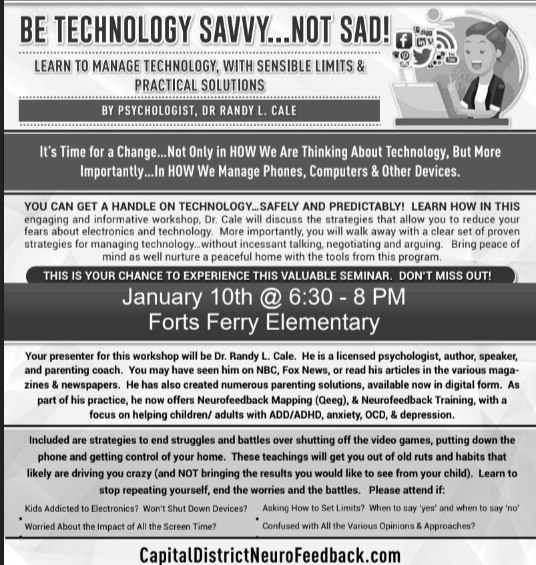
    Dr. Randy L. Cale, an experienced psychologist in the Albany, New York region, will offer a class on how to use technology in a healthy and predictable manner. In this interesting and educational presentation, Dr. Cale will provide ways for lowering anxieties about electronics and technology, as well as a clear set of established strategies for managing technology without continual negotiation and conflict. Using these strategies can help you achieve peace of mind and a pleasant home atmosphere.

    This class will be conducted on January 10th from 6:30-8pm at Forts Ferry Elementary in Albany’s Latham neighborhood. Dr. Cale is a certified psychologist, author, lecturer, and parenting consultant who has been on NBC, Fox News, and in a variety of periodicals and newspapers. As part of his practice, he offers Neurofeedback Mapping (Qeeg) and Neurofeedback Training to children and adults suffering from ADD/ADHD, anxiety, OCD, and depression.

    Do you have children that are hooked to or refuse to turn off electronics? Do you have questions about how to establish boundaries or are concerned about the impacts of screen time? This is the workshop for you. Learn how to pull your children out of academic ruts, how to eliminate rudeness and talking back, and how to instill healthy habits in your children.

    The post Psychologist Explains Parenting Connections Between Mobile Devices And Anxiety Albany NY appeared first on https://gqcentral.co.uk
  • Nature’s Influence On Your Brain

    Nature’s Influence On Your Brain

    The effect of nature on your brain

    Have you ever been asked where you want to live? What is your response? I’m sure it’s not on top of a high-rise structure in the town center. Most respondents say it’s by the sea, in the countryside, or in a cabin in the woods. This is not without cause. We feel most at ease when we are outside. We intuitively understand that spending time in nature benefits the mind, body, and spirit. And now science is on our side. Nature may help you focus and concentrate better, decrease stress and anxiety, restore cognitive function and mental well-being, increase creativity and problem-solving skills, and safeguard your physical health and fitness. Spending time in nature is so good for our health and development that it should be regarded as a “prescription” for everyone!

    Why is nature so good for us?

    The damage caused by free radicals causes inflammation in the body. Without delving too far into chemistry, the simplest explanation is that free radicals contain unpaired, or free, electrons. As a result, they are extremely chemically reactive, which is how they inflict so much harm on our cells. The number of negative ions in nature can neutralize unpaired electrons in free radicals and the positive ions emitted by electrical gadgets, screens, fluorescent lights, carpets, and pollution, especially in cities.

    Waterfalls, the seaside, rivers, and streams are excellent places to acquire more of those calming negative ions. The term “forest bathing” refers to the practice of immersing yourself in negative ions in dense woods. After big precipitation, especially if it was a thunderstorm, there is also an excess of negative ions.

    To maximize the advantages, consider walking barefoot, commonly known as grounding. This is simpler to do on a beach with soft sand. However, use caution in other areas because of potentially harmful things such as thorns, splintered wood, or sharp stones. In some situations, standing motionless and deep breathing may be preferable to walking. You will still receive the benefits you desire.

    If traveling to the beach or the forest is out of the question, you may still go for a walk in the neighborhood park or relax outside in your garden or backyard. Exposure to natural sunshine first thing in the morning has been shown to help reset the sleep-wake cycle and improve sleep. Keeping in mind that obtaining a good night’s sleep is extremely vital for brain health since insomnia is a risk factor for decreased brain function and dementia, spending time outside in nature, particularly in the sun, is essential. So, why not enjoy the sunrise, listen to the dawn chorus, or “simply be” outside with your morning coffee?

    What if you don’t have a backyard, a garden, or even a balcony? Don’t worry; studies have proven that adorning your home with plants and images of nature is equally beneficial to your health. Just a few minutes in nature may instantly improve our mood and make us feel calmer and even healthier! Here are some of the ways that spending time outside might benefit our health.

    Forest

    Boosts mood and reduces stress

    One of the most obvious advantages of spending time in nature is that it may assist in boosting our mood and reducing stress. Numerous studies have demonstrated that green space can help reduce anxiety and rumination (repeating unpleasant ideas) while enhancing self-esteem, pleasure, and overall well-being. Even if you don’t have time for a hike or a trip to the park, spending a few minutes outside in your backyard or walking around the block may significantly impact how you feel.

    Helps us to be more active

    Another significant advantage of spending time outside is encouraging us to be more active and obtain the necessary exercise. Exercise is vital for our overall health, and being active outside is a terrific way to acquire it. Walking, running, riding, swimming, and participating in sports are all excellent ways to be active while spending time outside. Furthermore, physical activity reduces stress and anxiety, increases attention and concentration, and may even assist in preventing dementia. So you’re getting three for the price of one! Exercising outside also stimulates us to exercise more. Why run on a treadmill in the gym, staring at a blank wall, when you can run among trees, a river, or across fields with the wind in your hair? I know which one I’d rather do.

    Gardening is another excellent way to spend time outside. It is satisfying to produce fruit, vegetables, flowers, or simply a beautiful garden, but gardening may also help preserve your brain from deterioration. Gardening is a terrific way to connect with nature since it is peaceful and relaxing and reduces stress and anxiety. Furthermore, all that digging and weeding gets your heart rate up. Furthermore, any fruits or veggies you cultivate are far more nutritious than those purchased in stores, which is great news for your health and brain.

    Avoid using headphones when exercising or conducting outdoor activities. In today’s tech-filled world, it’s critical that we disengage and unwind. Being attentive to nature and enjoying it with all of your senses is critical. Be aware of the earth beneath your feet; look at the colors, forms, and textures around you; look at the clouds; listen to the birds; listen to the waves smashing on the shore; listen to the leaves rustling on the trees; observe movement; notice the silence. Pay close attention. Being aware of nature elevates calm, decreases anxiety, and increases emotions of well-being. It will also leave you feeling revitalized and revitalized.

    Improves focus and concentration 

    Being outside has been demonstrated to assist increase focus and concentration, particularly in children who struggle to pay attention in school. If you’re having difficulty concentrating at work or school, take a break and go outdoors for a few minutes; you might be amazed at how much better you feel afterward.

    Connects us with other people 

    Spending time outside is also an excellent opportunity to interact with others, both family and friends. It’s easy to grow lonely when we spend all of our time indoors, but getting outside allows us to engage with others without interruptions while also getting some fresh air and sunshine. Plan an outside activity with friends or family, or discuss it with someone you observe while walking. We all require a social connection for our mental health; therefore, make time each week to interact with people in person!

    Lowers blood pressure

    According to a study of several studies, the overarching result was that spending time in green environments greatly reduces blood pressure. This is most likely because going outside allows us to relax both physically and psychologically. High blood pressure can not only cause a stroke, which basically destroys a portion of the brain, but it can also cause the brain to age quicker and lose function, eventually leading to dementia. High blood pressure can also lead to heart attacks, which is another incentive to get outside and enjoy nature.

    What is the best way to get some nature into your life?

    Spending at least two hours every week in nature allows you to reap the benefits described above. According to one research, this is the bare minimum of time required. This might be readily accomplished by taking a 20-minute stroll every day. A walk through the woods or along the ocean would be ideal. This is due to the fact that both trees and running water release those helpful negative ions.

    When you’re confined indoors for hours on end staring at your laptop or television screen, it’s crucial to step outside at least once a day, if only to rest your eyes. However, as we now see, there are other reasons to spend more time outside and appreciate nature! From stress reduction to blood pressure reduction, improved sleep, and relaxation. However, your brain gains the most from being outside in nature.

    So come outside and appreciate nature, whether you’re playing sports, strolling down the beach barefoot, hiking through the woods, or splashing in puddles after a thunderstorm. You may appreciate nature and get its numerous advantages regardless of the weather. What exactly are you waiting for? Put your coat on and go outdoors.

    References

    1. Quantifying the Impact of Scenic Environments on Health https://www.nature.com/articles/srep16899
    2. Role of free radicals in human inflammatory diseases https://www.aimspress.com/article/10.3934/biophy.2017.4.596
    3. Charge transfer in the living matrix http://www.wildqi.com.au/resources/8B/13707/Other/Charge%20transfer%20in%20the%20living%20matrix.pdf
    4. The harmful effects of positive ions on your health https://www.ionloop.com/blog/the-harmful-effects-of-positive-ions-on-your-health/
    5. Electric Nutrition: The Surprising Health and Healing Benefits of Biological Grounding (Earthing) https://www.researchgate.net/profile/James-Oschman/publication/320608127_Electric_Nutrition_The_Surprising_Health_and_Healing_Benefits_of_Biological_Grounding_Earthing/links/5b9645c34585153a531992ce/Electric-Nutrition-The-Surprising-Health-and-Healing-Benefits-of-Biological-Grounding-Earthing.pdf
    6. Effects of Light on Circadian Rhythms https://www.cdc.gov/niosh/emres/longhourstraining/light.html
    7. How Poor Sleep Affects the Brain https://www.sleepfoundation.org/sleep-deprivation/lack-of-sleep-and-cognitive-impairment
    8. Green space, urbanity, and health: how strong is the relation? https://www.ncbi.nlm.nih.gov/pmc/articles/PMC2566234/
    9. Effects of Exercise and Physical Activity on Anxiety https://www.ncbi.nlm.nih.gov/pmc/articles/PMC3632802/
    10. The Mental Health Benefits of Exercise https://www.helpguide.org/articles/healthy-living/the-mental-health-benefits-of-exercise.htm
    11. Physical exercise and activity may be important in reducing dementia risk at any age https://n.neurology.org/content/92/8/362
    1. The great outdoors: how a green exercise environment can benefit all https://extremephysiolmed.biomedcentral.com/articles/10.1186/2046-7648-2-3
    2. Benefits of Gardening Activities for Cognitive Function According to Measurement of Brain Nerve Growth Factor Levels https://www.ncbi.nlm.nih.gov/pmc/articles/PMC6427672/
    3. Why Gardening Is Good for the Body and the Brain https://www.psychologytoday.com/gb/blog/how-my-brain-works/202204/why-gardening-is-good-the-body-and-the-brain
    4. 7 Reasons to Spend Mindful Time in Nature https://chopra.com/articles/7-reasons-to-spend-mindful-time-in-nature
    5. How Does Nature Impact Our Wellbeing? https://www.takingcharge.csh.umn.edu/how-does-nature-impact-our-wellbeing
    6. This Might Be The Easiest Way To Boost Concentration And Memory https://www.businessinsider.com/boost-concentration-and-memory-by-going-outside-2014-8?r=US&IR=T
    7. Relationships and community: statistics https://www.mentalhealth.org.uk/explore-mental-health/statistics/relationships-community-statistics
    8. Associations between Nature Exposure and Health: A Review of the Evidence https://www.ncbi.nlm.nih.gov/pmc/articles/PMC8125471/
    9. High blood pressure dangers: Hypertension’s effects on your body https://www.mayoclinic.org/diseases-conditions/high-blood-pressure/in-depth/high-blood-pressure/art-20045868
    10. Spending at least 120 minutes a week in nature is associated with good health and wellbeing https://www.nature.com/articles/s41598-019-44097-3
    11. Negative Air Ions and Their Effects on Human Health and Air Quality Improvement https://www.ncbi.nlm.nih.gov/pmc/articles/PMC6213340/


    The post Nature’s Influence On Your Brain appeared first on https://gqcentral.co.uk

  • Is There A Relationship Between The Brain And Mental Illness?

    Is There A Relationship Between The Brain And Mental Illness?

    Is there a link between the brain and mental illness?

    Every now and again, we may experience a period of depression. Even though we know better, there are times when we make jokes about someone being mad or utterly insane. We’ve all had some experience with mental illness, but that doesn’t imply we really comprehend or realize what it includes. Mental disease can emerge by influencing your ideas and feelings, influencing your behavior. This might make it difficult for the person to function in daily life. This, understandably, causes them a tremendous lot of grief.

    People are typically reluctant to discuss mental illness. It might be difficult to comprehend why someone feels low or acts differently than normal. But it’s vital to realize that everyone is unique and that we all cope differently.

    Social factors can contribute to mental illness. Long-term stress, being in debt, losing a loved one, or experiencing abuse, neglect, or solitude are some of these reasons. A person’s living environment might also contribute to poor mental health. Addiction to drugs or alcohol is one example, as is trauma from an accident, military duty, or witnessing a crime. Physical factors might include a head injury from a fall or a seizure. Finally, genetics can contribute to poor mental health.

    Depression

    Despite the fact that most causes are external, with the exception of heredity, a mental disease is frequently associated with the brain. This is due to alterations in the brains of persons suffering from mental diseases. However, it is crucial to realize that not everyone with a change in their brain will develop a mental disease. And not everyone suffering from a mental disorder will see a change in their brain.

    Each form of mental illness is unique and can impact both the brain and the individual in different ways. It is important to note that not all brain disorders are mental health problems. Dementia, Parkinson’s disease, epilepsy, and multiple sclerosis are among them. Having said that, when people deal with these life-changing diagnoses, these diseases can contribute to poor mental health.

    The brain is the most complex organ in the human body. It is composed of grey matter, which is actually millions of neurons. These neurons communicate with the nerves in the body. Synapses transmit these messages from one nerve cell to another. These synapses are actually very small spaces between neurons. Messages are sent electrically along the neurons (also known as nerves). The message is chemically transmitted across the gap via neurotransmitters when it reaches the synapse. This is an oversimplified explanation of a complex process.

    This is because mental health disorders can influence the brain’s structure, chemistry, or function. Some mental diseases are caused by errors in how neurons communicate when the brain’s chemistry is disturbed. For decades, researchers have claimed that persons suffering from depression had low amounts of the chemical serotonin in brain synapses. However, a fresh study has called that notion into question.

    Antidepressant medicine that elevates serotonin levels in the brain has been used for many years and appears to offer advantages for persons with depression based on the assumption that low serotonin levels are associated with depression. Some experts believe that this might be due to the placebo effect. Evidence is also pointing to SERT, a protein that transports serotonin. However, the chemical imbalance idea appears to have some merit. Sorry if this perplexes you, but mental health and the brain are both extremely difficult topics.

    According to the chemical imbalance idea, there is little serotonin but an excess of cortisol, the stress hormone. Cortisol levels that are too high can harm the brain, notably the hippocampus. Because the hippocampus is crucial for learning and memory, injury to this portion of the brain can result in difficulty remembering things and difficulty learning, concentrating, or making decisions. It can eventually develop to dementia. Depression also has an effect on the brain, leading certain parts to be less active and others to be more active.

    Schizophrenia is a severe mental disorder that can lead the person to see things that aren’t there, speak in a garbled manner, and behave inappropriately or unexpectedly. There are various hypotheses on what changes in the brain create schizophrenia. One is that there is insufficient dopamine in the brain. Another issue is that certain locations have too much dopamine while others have not. This is problematic because dopamine is supposed to overstimulate neurons. This might result in aggressive or impulsive behavior. Another idea is that either too many or too few receptors exist. Receptors are the “lock” in neurons, while dopamine is the “key” that unlocks them. This is yet another incredibly complicated biological process, and while dopamine appears to influence the brain and behavior, the explanation for this is unknown. To make matters even more complicated, two more brain chemicals are involved in schizophrenia. Glutamate and norepinephrine are the two (also known as noradrenalin).

    Drugs that inhibit dopamine receptors are one type of medicine used to treat schizophrenia. However, they have unpleasant side effects such as muscular spasms, stiffness, and tremors, which are all hallmarks of Parkinson’s disease, which is also associated with low dopamine levels in the brain.

    Anxiety and anxiety disorders account for 40% of all medical visits, which is troubling. Anxiety occurs when a person is too sensitive to events and is constantly worried or scared. The effect of anxiety on the brain is first and foremost that the stress hormone cortisol is present on a continuous basis. As previously stated, this can result in hippocampal brain damage. Chronically high cortisol levels can also impair sleep, exacerbating anxiety. Anxiety also causes the amygdala to expand, making it hypersensitive. The amygdala is a component of the limbic system, which is associated with emotions. Because of the amygdala’s hypersensitivity, anxious persons are always scared and apprehensive. It also makes rational cognition and happy feelings much more difficult. Unfortunately, the amygdala is not acting alone in causing anxiety. Constant contact between a region of the brain’s frontal lobe and the amygdala reinforces feelings of worry and terror.

    As previously stated, the brain is inextricably intertwined with mental health since these conditions frequently produce chemical and anatomical changes in the brain. The good news is that many mental diseases are treatable with medicine and behavioral therapy.

    References

    1. Mental health problems – an introduction https://www.mind.org.uk/information-support/types-of-mental-health-problems/mental-health-problems-introduction/causes/
    2. The risk of developing depression when suffering from neurological diseases https://www.ncbi.nlm.nih.gov/pmc/articles/PMC3546419/
    3. Brain Basics: The Life and Death of a Neuron https://www.ninds.nih.gov/health-information/public-education/brain-basics/brain-basics-life-and-death-neuron
    4. What has serotonin to do with depression? https://www.ncbi.nlm.nih.gov/pmc/articles/PMC4471964/
    5. The serotonin theory of depression: a systematic umbrella review of the evidence https://www.nature.com/articles/s41380-022-01661-0
    6. Overview – Selective serotonin reuptake inhibitors (SSRIs) https://www.nhs.uk/mental-health/talking-therapies-medicine-treatments/medicines-and-psychiatry/ssri-antidepressants/overview/
    7. Placebo Effect in the Treatment of Depression and Anxiety https://www.frontiersin.org/articles/10.3389/fpsyt.2019.00407/full
    8. The serotonin theory of depression: a systematic umbrella review of the evidence https://www.nature.com/articles/s41380-022-01661-0
    9. Effects of brain activity, morning salivary cortisol, and emotion regulation on cognitive impairment in elderly people https://www.ncbi.nlm.nih.gov/pmc/articles/PMC6616250/
    10. Where in the Brain Is Depression? https://www.ncbi.nlm.nih.gov/pmc/articles/PMC3619732/
    11. Schizophrenia https://www.mayoclinic.org/diseases-conditions/schizophrenia/symptoms-causes/syc-20354443#
    12. What Is Dopamine? https://www.verywellhealth.com/dopamine-5086831
    13. Schizophrenia https://www.healthdirect.gov.au/schizophrenia
    14. Dopamine and glutamate in schizophrenia: biology, symptoms and treatment https://www.ncbi.nlm.nih.gov/pmc/articles/PMC6953551/
    15. The Relationship Between Schizophrenia and Dopamine https://www.verywellmind.com/the-relationship-between-schizophrenia-and-dopamine-5219904
    16. Pathogenesis of Parkinson’s Disease: dopamine, vesicles and α-synuclein https://bit.ly/3fqjtKB
    17. 40 per cent of all GP appointments about mental health https://www.mind.org.uk/news-campaigns/news/40-per-cent-of-all-gp-appointments-about-mental-health/
    18. The Neurobiology of Anxiety Disorders: Brain Imaging, Genetics, and Psychoneuroendocrinology https://www.ncbi.nlm.nih.gov/pmc/articles/PMC3684250/
    19. Anxiety and Sleep https://www.sleepfoundation.org/mental-health/anxiety-and-sleep

    The post Is There A Relationship Between The Brain And Mental Illness? appeared first on https://gqcentral.co.uk

  • Don’t Let Anxiety Rule Your Business Life

    Don’t Let Anxiety Rule Your Business Life

    Don’t let fear rule your life

    The references here to the different types of anxiety are not meant to diagnose you. But you may find them useful if you go to a doctor, psychologist, or counselor who uses these terms.

    Anxiety is not a new phenomenon since COVID-19 and associated events like as unemployment and business closures have not contributed to it.  According to the National Institute Of Mental Health, Anxiety disorders affect 40 million people in the United States alone. As the most common mental condition, therapeutic options are plentiful; nonetheless, only 36.9% of sufferers obtain care. Our brains are built to think about survival, which in ancient times required continual alertness. This survival mode, known as “fight or flee,” was a code for situations that required panic to go to a safer position. When anxiety becomes uncontrollable or is accompanied by extreme fear or concern, it can disrupt daily life. Fortunately, there are ways to reduce anxiety and anxiety attacks, and the best part is that they may be applied immediately and without the need for medication. It is critical to understand that natural medications may frequently be safely used with traditional medical treatments, but it is always best to see a doctor first. And as Main Street company owners, we may notice this tendency in our staff and even our consumers.

    Anxiety problems frequently go unnoticed and untreated. Fortunately, therapy can be beneficial. The right therapy may improve the quality of your life, your relationships, and your productivity. It can also improve your overall health. You don’t have to be always concerned and nervous. If you see symptoms of an anxiety problem, see a doctor. It is best to get a diagnosis and treatment as soon as possible. This can help to mitigate the negative effects of anxiety disorders. Anxiety is frequently treated with a combination of medication and therapy. The information provided below may be useful to you in dealing with employees and customers and conflict resolution.

    Fear can cause anxiety

    Everyone is afraid of something. In contrast, phobias are unreasonable, severe, and seemingly all-encompassing fears. Fears of heights, small spaces, dogs, germs, bees, snakes, spiders, difficult-to-escape situations, and flying are examples of specific phobias. Specific phobias are the most common type of anxiety disorder and may include several of the symptoms listed on our list of anxiety symptoms.

    Some people feel stressed in their stomachs. IBS patients have unpleasant digestive disorders such as stomach discomfort, constipation, and diarrhea. Irritable bowel syndrome and anxiety are linked because the neurological system partially regulates the colon. The nervous system’s reaction to stress may have an impact on the stomach.
    Fifty to ninety percent of IBS patients also have an anxiety or depressive issue. IBS symptoms may be relieved by stress management and psychotherapy. IBS symptoms may be relieved by stress management and psychotherapy.

    Anxiety… or Phobia?

    A phobia is a strong dread of, or aversion to, specific items or circumstances. Although being concerned about some situations is understandable, the terror that people with phobias experience exceeds the actual risk offered by the scenario or object.

    Individuals suffering from a phobia may have an unreasonable or obsessive concern with the dreaded object or scenario. They may actively avoid the scary thing or scenario. When they come into contact with the dreaded object or scenario, they suffer tremendous instant fear. They are terrified of inevitable items and circumstances.

    Phobias and phobia-related diseases come in a variety of forms.

    Certain phobias (also known as basic phobias) are defined by having a significant fear of or severe anxiety about specific things or circumstances. Fear of insects, certain creatures such as spiders, dogs, and snakes, and getting injections or blood are examples of specific phobias.

    People with a social anxiety disorder (previously known as social phobia) exhibit an extreme, generalized dread or worry about social or performance circumstances. They are afraid that the activities or behaviors linked with their anxiety will be judged adversely by others, making them feel embarrassed. People who suffer from social anxiety frequently avoid social situations as a result of this dread.

    People suffering from agoraphobia are extremely anxious about two or more situations: using public transit, waiting in line or standing in a crowd, and being outside alone. People suffering from agoraphobia frequently avoid these circumstances because they believe it will be difficult or impossible to go out if they experience panic attacks or other humiliating symptoms. A person suffering from the most severe type of agoraphobia may become housebound.

    Separation anxiety is commonly assumed to affect just children, although adults can also be diagnosed with separation anxiety. People who suffer from separation anxiety are terrified of being separated from the people they care about. They frequently fear that something bad will happen to their carers or that something bad will happen to them while they are separated. Because of this dread, they resist separation from their caretakers and being alone. Separation anxiety patients may have dreams about being removed from their carers or feel physical symptoms when separation happens or is anticipated.

    Selective mutism is a more uncommon anxiety illness. People with selective mutism do not talk in specific social contexts while having normal language abilities. Selective mutism commonly appears before age five and is frequently coupled with excessive shyness, fear of social shame, obsessive-compulsive tendencies, withdrawal, clinging behavior, and angry outbursts. Individuals with selective mutism are frequently diagnosed with additional anxiety disorders.

    Anxiety and panic episodes are widespread. Panic disorders are rare, affecting just around 2% of the population. A person is diagnosed with panic disorder if he or she has at least four panic episodes per month over a prolonged length of time. Panic episodes are frequently unrelated to a specific scenario and occur on their own. When panic attacks occur regularly and there is a significant and persistent dread of another attack, panic disorder is diagnosed.

    Know the signs of anxiety

    Anxiety disorder symptoms might be comparable to those of a heart attack or other medical emergency. If you are having your first panic attack or are concerned about your health, dial 911 or go to the nearest emergency facility. If you are suffering an anxiety attack and unsure whether to go to the emergency department, it is preferable to leave. Health experts can ensure that you are safe and receiving the necessary therapy.

    Keep these suggestions in your back pocket if your social anxiety comes up at work. Get away from your pals: One of the first reactions to anxiety symptoms is to distance yourself from those you care about. If you don’t want to spend time with your friends or spouse, it might be because you’re focusing all of your mental energy on managing your nervous thoughts. As you strive to remain calm, you are likely to detach yourself from the current moment and feel intellectually and emotionally drained.

    New daily habits can reduce your anxiety

    Obsessive behavior: Logically, you may know those worrying thoughts are simply that… concerns circulating in your brain but not your current reality. Many people, however, believe that these bothersome anxieties have taken over their thoughts to the point that they can no longer control them. You may constantly believe that something bad will happen to your loved ones or that they will die, and you may frequently pray for their safety.

    When you’re worried, your brain goes into overdrive, and you may have an extremely short fuse when interacting with other people. Or, for that matter, with technology. Or even with your dogs. We have little time for small chats while we are obsessed with anxiety feelings, we can’t take it when anything doesn’t go our way, and we may even dispute with anybody who attempts to help us. Even if you’re not the type of person who lives for a party, you’re probably having a wonderful time. Remember that as anxiety rises, so does fear of social settings. Most individuals become more critical of themselves and are concerned about every contact with strangers and even their coworkers. You may be too concerned with how you appear, what others think of you, whether people are gossiping about you behind your back if no one likes you, and if you sound foolish when you speak. This is a symptom of social anxiety, and it frequently leads to people avoiding social events due to their worries.

    Many people suffer their most extreme anxiety at the most inconvenient time of day: night.

    People frequently lay awake in bed pondering and worried since all diversions have suddenly vanished. However, after the pressures of the day are passed, the ideas we brushed under the rug reemerge and demand our attention.

    A not-so-fun truth is that the brain cannot tell the difference between an actual threat (such as a tiger following you) and a perceived threat (worrying about being fired or angry from a friend). When you are in a fight-or-flight scenario, whether real or imagined, your body adapts and tries everything it can to survive. Instead, the brain diverts blood away from the digestive system and into the muscles. The sensation might be described as a knot in the stomach, a weight in the stomach, or even butterflies flitting around. It’s critical to understand that the brain and stomach are linked since the gut contains more than 90% of serotonin. When our microbiota is harmed, we can get unwell.

    Many individuals have financial anxiety when they are just scraping by, but even those who have more than enough to get by might be concerned. If you or your spouse loses your source of income, receives a hefty bill for medical treatment or property damage, or is forced to care for a sick parent, you will face significant financial strain. Anxiety can manifest as a result of stress. People might reflect on their connection with money and its significance in their life. When judgments are made that are not in line with the value of money, and as a result, intended goals are not met, some tension is unavoidable. For example, if money represents security and freedom, and you do not handle your money in such a manner that you may enjoy security and freedom, it will surely cause worry.

    Get to the root of the Anxiety problem

    Going into the workplace every day, whether you have toxic coworkers or a supervisor that micromanages you, is a definite way to create anxiety symptoms. The majority of individuals in the United States spend an inordinate amount of time at work or working, even at home. Most individuals read their emails in bed when the phone is only a few inches away from their pillow. Anxiety is caused by the persistent feeling that we must be connected. We are constantly available and expected to be available, which causes stress. The burden is harder, the workweek is longer and appears to go on forever since our smartphones keep us connected to work even when we’re on vacation. If you can’t shake the feeling that you despise your job, speaking with a specialist about suitable therapy can help. They can assist you in dealing with emotions of insecurity, loss of control, and self-control at work.

    Anxiety can be environmental, hereditary, or chemical, and all three elements – your circumstances/environment, DNA, and chemical makeup – all play a role in the development of an anxiety condition. Many chemicals in our brains influence our mood. Serotonin, GABA, dopamine, and norepinephrine are the key ones that influence anxiety. Anxiety can arise when the levels of these neurotransmitters are disturbed. This implies that if your mother or father had anxiety, your odds of having it increased, especially if you witnessed their symptoms firsthand.

    Friendship may bring you notes of encouragement, long conversations, and even a heartfelt embrace. But what happens when your friendships or sexual relationships are under stress? Many people feel pressure to be happier, better, and more helpful from the outside world, especially their local surroundings. When we feel like falling short, we are typically overwhelmed, leading to anxiety symptoms. The same reaction happens when someone we love and trust disappoints or betrays us, or when we go through a huge transition. Even lovely events, such as marriage or childbirth, can elicit terrible feelings. Most of the time, talking to a professional about these ideas and feelings is the best method to battle them.

    Anxiety And Our Mobile Devices

    Most of us are guilty of focusing more on our phones, laptops, and tablets than on our spouses, pets, or even our children. It’s easy to continuously check, scroll, or read the newest news in a world where you’re always connected. Too much technology, on the other hand, can produce anxiety symptoms since it overstimulates the brain and nervous system, practically developing an addiction. If we abandon our technology for a time and find ourselves continuously thinking about it, wondering what others are doing online and stating what we missed, we might develop anxiety over losing out. If being away from our electronics causes us anxiety, Whatley suggests talking to a close friend or coworker. This is due to our desire for connection and involvement, which our phones can deliver instantaneously. A simple discussion can have the same impact and help to alleviate unpleasant feelings.

    Anxiety and the difficulties it creates, such as nervousness, sleeplessness, difficulty focusing, deepening depression, and overall bodily imbalance, are elements that wear down the body and mind. The following recommendations can assist you if you are seeking for a thorough solution that will allow you to minimize worry and tension to a minimum.

    If you’ve spent days on end doing strenuous tasks, attempt to finish as soon as possible so you may relax. This is one of the secrets to keeping wakefulness’s tiredness and fatigue (which are so beneficial throughout the day) from turning into worry. Finish early, take time to rest, and disengage from the outside world, especially if you’re tired. Valerian, for example, has a relaxing effect, decreases irritation, and improves sleep without producing reliance or issues such as night terrors or feeling heavy the next day. It’s the ideal answer for restoring your normal sleep cycle and calming your nervous system.

    The post Don’t Let Anxiety Rule Your Business Life appeared first on https://gqcentral.co.uk
  • Personal Satisfaction-Destroying Mindsets

    Personal Satisfaction-Destroying Mindsets

    8 Mindsets That Destroy Personal Satisfaction

    Personal fulfillment, for most individuals, has less to do with their financial account or social media status and more to do with how they handle their day-to-day life.

    We all want more out of life, but if we don’t take a step back and look at where we are, we might become oblivious to the adjustments we actually need to make. We all know that some individuals appear to live at the top of their game at jobs or in life, while others struggle just to get through the day. It is critical to determine why this occurs.

    We are all born with a set of beliefs that define our personality and worldview. While we may believe that we have free choice, our views are built into our brains. Your thinking has a significant impact on your level of happiness. Your mental condition influences your behavior. The more positive your attitude, the better your life will be. Here are eight attitudes that sabotage personal fulfillment.

    Positive mental

    1. The Fixed Mindset:

    The fixed mentality holds that your personality is predetermined. It is the belief that you are either born with a certain personality or you are not. If you’re not, it’s because your parents didn’t pass on the proper mix of genes to you. There is no room for advancement. Adopting this attitude is risky since it generates a self-fulfilling prophecy. You spend your whole life trying to convince yourself that you are not who you were meant to be. Depression and poor self-esteem might result from this.

    2. The All-or-Nothing Mindset:

    You’re thinking in black and white terms, with little opportunity for complexity. It’s when you feel that everything you do is either excellent or evil, with no between ground.

    It is the attitude of someone who believes they are either a hero or a villain. They can never be anything other than completely correct or completely incorrect. There is no space for ambiguity. This perspective is harmful because it convinces us that we are either the greatest or the worst in all we do. You must be the worst if you are not the greatest. This results in an unachievable standard. Because we all have flaws, why should we expect perfection? Why should we feel bad if we’re not the greatest at everything? Why not praise our strengths instead than dwelling on our flaws?

    3. The Overwhelmed Mindset:

    You feel as though you can never accomplish or be enough. This thinking results in a feeling of being overwhelmed. When you are in this state, you stop living in the present and begin to focus on the future and what has to be done to get there. You are under so much stress that you begin to lose sight of what is really important at the time. This kind of thinking is problematic because it makes us feel horrible about ourselves and our life.

    4. The Perfectionism Mindset:

    The perfectionist attitude manifests itself in the need for everything to be faultless and reach impossibly high standards. It instills continual uneasiness and unease. You’ll never be pleased if you don’t measure up. This often leads to feelings of inadequacy, which may eventually lead to melancholy. You’re more prone to get into conflicts and confrontations with people if you’re continuously wanting to be better than everyone else.

    5. The “I’m not good enough” mindset:

    This worldview is founded on the conviction that you are unworthy of happiness. It implies that your life is fundamentally defective and that there is no way to improve it. There are two major issues with this mentality. For starters, it is founded on a fallacious assumption. There’s no reason to think we’re faulty. Second, it’s difficult to attain true satisfaction when we’re always comparing ourselves to others. We are unaware that the majority of individuals around us are in a similar condition. They are in the same boat as we are. Everyone has their own set of talents and shortcomings. We’re all simply doing our best.

    6. The Control Mindset:

    Micromanaging every element of your life is unhealthy. You strive to control everything in your life rather than realizing that there are certain things you just cannot manage. This causes tension and worry, both of which may contribute to depression. You may even become a prisoner to your own ego, becoming so preoccupied with controlling what other people do and say that you lose sight of your objectives.

    7. The Victim Mindset:

    Victims often perceive themselves to be weak and powerless in the face of adversity. As a result, sentiments of bitterness and self-pity arise. You get the impression that you are always being taken advantage of. You believe that others have it better than you. You consider yourself a victim. The victim attitude holds that other people are to blame for your difficulties. When anything goes wrong, you think you’re simply one of many victims in the world. It’s no surprise that you feel powerless over your life if you constantly consider yourself a victim. It’s difficult to take action when you constantly feel taken advantage of.

    8. The Comparison Mindset:

    You are always comparing yourself to others. You measure yourself against others who have more than you. The comparison mindset is founded on the belief that other individuals are superior to you. It all comes down to how much better they are than you. This might cause you to feel envious of individuals who have more money or material possessions than you. It’s also a risky way of thinking since it may lead to jealousy and hatred. Your personal contentment is greatly influenced by how you think about your life.

    Conclusion:

    Finally, whether they are negative, restrictive, or dysfunctional, we all have attitudes that limit our potential to change. It’s quite OK to acknowledge it. You’ve most likely engaged in some of these behaviors.

    What’s the big deal? Now is the moment to pause and reflect on your own behavior and what it means to you. Whether it’s your health, relationships, or work, you’ll only see great results if you’re ready to alter the way you think and act. The earlier you start, the better.

    We are so fixed in our habits that we fail to see that we have a choice in our behavior. Everything we do is influenced by our choices, including our capacity to enjoy life and have a meaningful profession. It’s critical to continuously remind oneself of these eight attitudes that sabotage personal fulfillment.


    References:

    https://www.inc.com/amy-morin/10-things-mentally-strong-people-give-up-to-gain-inner-peace.html

    https://positivepsychology.com/growth-mindset-vs-fixed-mindset/

    https://www.lifehack.org/articles/communication/move-away-from-the-victim-mentality.html


    The post Personal Satisfaction-Destroying Mindsets appeared first on https://gqcentral.co.uk
  • How To Eliminate Negative Thoughts

    How To Eliminate Negative Thoughts

    How To Eliminate Negative Thoughts, So You Get More Done

    We often hear quotations and ideas that claim that success or failure starts in the mind. This is due to the strength of our ideas. They exert indirect influence over our activities. Negative thoughts may drag you down so much that you waste your time and energy.

    Although unpleasant thoughts might arise at any time, it is a fallacy to assume they are uncontrollable. In this post, we’ll go over some of the most effective and tried-and-true methods for getting rid of negative ideas.

    Defining Negative Thoughts

    Some individuals find it difficult to confess they are having negative thoughts. They mistakenly believe it inevitably makes them a terrible or negative person. That is completely false since even the nicest, and most optimistic individuals have negative thoughts from time to time.

    Everyone has a mind in which their ideas are developed. We often connect with our minds; in other words, we might perceive our minds speaking to us. McLean Hospital’s Dr. Lisa W. Coyne explains the circumstance as our verbal mind connecting to our language brain, which acts as a danger detector. It’s excellent to have a danger detector or a critical voice. Your mind evaluates dangerous circumstances and attempts to persuade you to run or fight.

    Feeling positive

    The critical voice in our heads may save us from making a mistake, but the risks it detects are too broad. Everything outside of your comfort zone, including duties and possibilities, is seen as a danger. The main issue is that the mind’s diagnosis isn’t always right. People who block off reality and become locked in their heads are doomed.

    When it comes to productive tasks, it is easy to leave. Fear of failure, shame, imperfection, and difficulty prevents us from confronting our challenges straight on. Negative thinking may even drive you to pass up chances.

    How To Control Negative Thoughts

    Negative thoughts may seem like quicksand, swiftly sinking our passion for life and work. Here are seven techniques for staying grounded.

    Talk back

    While bad sentiments may be based on actual events, they are not unarguable facts. As a result, you may debate them inside yourself. To begin, you must acknowledge the negative notion as a creation of your mind rather than fact. Then you may contradict the notion with a better and more accurate one. Your critical voice, for example, may accuse you of incompetence. “I’ve trained rigorously for two years for this chance; therefore, I’m competent,” you may remark.

    Write and question negative thoughts.

    Because we think more quickly and more abstractly than we write, writing is an excellent technique to slow down the transmission of negative ideas. Writing down unpleasant ideas encourages us to consider them critically. When negative ideas are put down, they might become irrational and less frightening.

    However, instead of merely writing, try to answer the following questions regarding your views.

    1. What advantage does this negative idea provide me?
    2. What possibilities would I lose if I act on my negative thoughts?
    3. What do I stand to gain or lose if I instead think positively?

    Surround yourself with positive influence

    Because you can’t extinguish a fire with more fire, why hang out with negative individuals when you’re surrounded by negative thoughts? Thinking in the same direction, understandably, fosters a feeling of camaraderie. When you’re battling with negative ideas, though, the ideal individuals to hang out with are those that are upbeat and happy. Allow pleasant energy to nourish your eyes and ears.

    Be your own best friend.

    Be nice and kind to yourself, just as you would your closest friend. Allow yourself to weep when negativity overwhelms you, and then soothe yourself. Discuss the bad ideas with your closest friend and inspire yourself with better positive ones. Tell yourself what you would say to your closest buddy in your position.

    Try replacing negative thoughts.

    The simplest method to overcome bad ideas is to replace them. You can’t stop thinking, but you also can’t think about two things at the same time. Rather than struggling to get rid of a bad notion, let your mind blank. Consider tasks or topics about which you like thinking and communicating.

    The positive ideas will energize you and put you in a creative state of mind.

    Use affirmations

    Affirmations are a common method for overcoming negative thinking. Affirmations such as “I like my work,” “I enjoy being creative,” and “I am a vital component of my team.” “I am confident,” “I am a competent leader,” and similar phrases may have a significant impact on how you view yourself over time. Affirmations may be made once a day or whenever you see a negative idea sneaking in.

    Try meditation or movement.

    meditation calms mind and bodyMindfulness and meditation might assist you in relaxing and removing negative thoughts. Moving your body may also disrupt your brain flow long enough to remove unpleasant ideas. Get up or lie down, take a stroll or sit down, whatever it takes to alter your posture.

    Try gratitude

    In challenging times, we may maintain a good attitude by focusing on what we are thankful for. Gratitude for even the tiniest things, like as nice coffee, may make tough work easier. Instead of focussing on the bad, consider being appreciative of all the positive aspects of your life and career.

    Don’t ignore negative thoughts.

    Contrary to popular belief, dismissing unpleasant thoughts is a poor tactic. Because we reject bad ideas without first comprehending why they have arisen. We have a tendency to repeat activities that promote negative beliefs. You shouldn’t flee bad ideas like a scaredy-cat, but you also shouldn’t let them overrun your life.

    Solve the root problem

    Negative thinking is usually the result of a less visible issue. The issue might be ideals or behaviors that we acquired as children. When we identify and address these underlying issues, our fight with the negative ideas they generate is over. It should be noted that you may need expert assistance in executing this plan.

    Conclusion

    You must work hard to eliminate negative ideas. They cast a negative light on the world and on yourself. They cause you to lose faith in your talents and prevent you from being very productive.

    References:

    https://www.mcleanhospital.org/essential/4-ways-stop-negative-thinking


    The post How To Eliminate Negative Thoughts appeared first on https://gqcentral.co.uk
  • How Negative Thinking Affects Our Bodies and What We Can Do

    How Negative Thinking Affects Our Bodies and What We Can Do

    How Negative Thinking Affects Our Bodies and What We Can Do

    How Negative Thinking Affects Our Bodies and What We Can Do: Do you ever find yourself pondering the past or fretting about the future? If that’s the case, you’re not alone. According to experts at the University of New South Wales, up to 70% of adults regularly think negatively. Unfortunately, the negative thinking we indulge in has a significant impact on our mental health.

    We are all aware that negative thinking is harmful to our health. But how does it affect us specifically? And how can we begin to combat it? Continue reading to find out.

    We feel bad when we think negatively.

    Negative thinking can make us feel bad because it causes stress hormones like cortisol to be released.

    These hormones are intended to aid our survival by enhancing attentiveness and focus. However, when we are constantly stressed, it can lead to significant health concerns such as anxiety disorders, depression, heart disease, diabetes, high blood pressure, and even cancer.

    The idea is to teach your brain not to spend time thinking about things that make you unhappy. 

    One approach is cognitive behavioural therapy (CBT).

    CBT assists patients in developing methods to change their negative thought habits. It should become simpler to refocus on more positive thoughts with practice and time.

    negative thinking affects our bodies

    Surfing Grandad

    Negative thinking causes bodily discomfort.

    Negative thinking can cause physical discomfort. Even if we are unaware of it, the mental stress caused by negative thoughts can result in various physical symptoms such as headaches and muscle stiffness.

    Negative thinking has a significant impact on our mental health. According to research, we are more likely to be irritated and worried when we have a negative perspective. 

    Negative thinking is also linked to depression, which leads us back to physical discomfort. Depression is frequently accompanied by chronic pain, which returns us to the psychological stress that began this vicious cycle in the first place!

    The good news is that if you know what you’re up against, there are solutions to break the pattern. 

    The most effective technique to overcome negative ideas is to replace them with positive ones. 

    According to one study, persons who practise thankfulness are less likely to be depressed at the end of the day than those who do not – appreciation makes them feel better about their life. 

    It makes them less likely to ruminate about adverse events throughout the day.

    While negative thinking may appear unavoidable at times, there are strategies to overcome it and keep your mind healthy.

    We become ill as a result of negative thinking.

    Negative thinking can harm our health in a variety of ways. 

    For starters, it can cause stress, which has been found to negatively influence our immune system and make us more susceptible to seasonal flu. 

    It has also been demonstrated that negative thinking can make us unwell by increasing cortisol levels, the stress hormone. 

    Cortisol is critical for our long-term health, but when we are chronically stressed, our systems produce an excess of cortisol. This disrupts the balance of other hormones in our brain and body required for nutritional health.

    one positive thought

    Negative thinking has an even more negative impact on our bodies.

    Negative thinking harms our mental health, but it also harms our physical health.

    The stress hormones created when we think negative thoughts might even influence how our immune system operates, making us more vulnerable to disease. 

    Chronic stress causes the body’s fight-or-flight response, delaying and weakening the immune system.

    Chronic stress lowers the immune system and hinders sleep, and leads to overeating or skipping meals entirely. 

    Negative thoughts can also cause an increase in blood pressure and heart rate, both of which make you more vulnerable to strokes and heart attacks.

    How to Get Rid of Negativity and Begin Thinking Positively

    Many people struggle with negative thinking. We worry about the past and the future, and we become so caught up in ourselves that we never take care of ourselves.

    The good news is that there are methods for dealing with negativity and thinking more positively.

    The first step is to detect your negative thoughts and determine their source. Perhaps you believe your boss despises you or that everyone thinks you’re foolish. However, if you consider the situation that generated that sensation, it may not be as horrible as you believe.

    Maybe your employer was having a terrible day, and one person felt you were stupid while others thought you were fantastic – keep that in mind the next time you get a similar reaction.

    The next stage is to determine why these negative ideas arise in the first place.  Perhaps it dates back to your youth, and perhaps it has nothing to do with your current situation. You can either concentrate on what makes you joyful or use mindfulness techniques to hold these feelings at bay until they go away on their own.


    The post How Negative Thinking Affects Our Bodies and What We Can Do appeared first on https://gqcentral.co.uk

  • 3 Reasons You Should See A Therapist In Santa Monica

    3 Reasons You Should See A Therapist In Santa Monica

    3 Reasons You Should See A Therapist In Santa Monica

    Are you thinking about seeing a therapist? Do you want to enhance your life and relationships but don’t believe you need to consult a psychologist? We want to help you understand the top three reasons why you should consult a therapist.

    It was anticipated in 2020 that over 41.4 million adults in the United States had mental health treatment or counselling at some point during the preceding year.

    Even more astounding, one in every six U.S. children aged 2–8 years (17.4 per cent) had a diagnosed mental, behavioural, or developmental condition, implying that therapy could be useful for all age groups, regardless of whether you have it diagnosed or not.

    Continue reading to learn the top three reasons to consult a therapist regardless of your problems.

    3 Reasons to Consult a Therapist

    Many people would agree that investing in your health is one of the most important things you can do to live a healthy, productive life. Seeing a therapist is an excellent approach to accomplish this!

    A therapist can assist you in identifying and addressing some of your emotions or anxieties, which will result in long-term benefits such as peace of mind and clarity when confronted with difficult situations.

    Addiction

    Substance misuse, whether it’s alcohol, nicotine, or opioids, is frequently utilised to deal with an unresolved issue. The same is true for addictive behaviours such as gambling, binge eating, and purging.

    A psychologist can help with both the problematic behaviour and the underlying issue, which could be stress, depression, or childhood traumas.

    Therapists can also assist family and friends who are dealing with the addiction of a loved one. Individual and group therapy can help family members and caregivers understand how to better support their loved one’s rehabilitation while also managing their own emotions.

    Depression

    Depression is one of the most common medical problems in the United States, affecting people of all ages, genders, and races. According to the National Institute of Mental Health (NIMH)Trusted Source, 17.3 million people in the United States experienced at least one episode of severe depression in 2017.

    It is tough to function on a daily basis when you are depressed. It has the potential to affect your career, relationships, sleep, energy, and appetite. It frequently leads to feelings of hopelessness, helplessness, and guilt.

    Therapy can help you identify the source of your depression and manage your symptoms, which can provide relief.

    Stress and anxiety

    It’s normal to be anxious about specific situations, such as a performance review, a first date, or a school presentation. A therapist will work with you to identify stressors in your life and will help you create effective coping strategies.

    It’s also a good idea to seek help if you’re struggling with day-to-day stress and anxiety. Excessive stress and anxiety can lead to a variety of diseases, including sleep difficulties, hazardous behaviours, and depression. While anxiety will never go away completely, you can learn to manage its symptoms.

    Why You Should See A Therapist

    3 reasosn you should see a therapist in santa monica

    With all of life’s issues, you may be finding it tough to manage your numerous responsibilities. You might be feeling overwhelmed and finding it difficult to regulate and arrange all of your emotions. And it’s possible that you’re not dealing with them in the most effective ways—a therapist can help you understand your emotions and teach you how to deal with them.

    Therapy can help with a variety of mental health issues. In therapy, people can learn to manage symptoms that may not respond promptly to treatment. According to studies, the advantages of treatment outlast the effects of medicine alone.

    Medication can assist with specific symptoms of mental health problems, but treatment teaches people how to deal with many of them without the need for medication or a trip to the doctor.

    doctor.

    These talents last long after treatment is completed, and symptoms may improve more with ongoing contact with the therapist.

    Individual Counseling

    Individual psychotherapy is frequently regarded as a type of counselling or talk therapy. It is used to treat a wide range of conditions, including depression, anxiety, interpersonal troubles, and addiction. Individual therapy requires you to meet with your therapist on a regular basis to discuss your difficulties. Your therapist may be able to provide insights into why you feel the way you do, as well as ideas for changing unfavourable habits of thought or behaviour to reduce your suffering.

    Individual therapy’s key value is that it provides you with access to an objective outside view of your difficulties and how to effectively handle them. This is especially useful if you are having difficulty making sense of your feelings and thoughts, which is common when struggling with depression or other mental health concerns.

    Couples Counseling

    There is going to be hurt sentiments and stress when we dispute with our partners. However, couple’s therapy is an option for everyone experiencing difficulties in their relationship; it is especially beneficial for individuals who have never participated in couple’s therapy before.

    It may be advantageous if you and your partner both want to save your relationship and are prepared to put out the effort. Brooke Sprawl, a therapist in Santa Monica, suggests another reason why so many couples fail to stay together:

    They don’t include treatment in their routine, whether they live together as a married pair or not.

    Family Counseling

    It is critical to recognise that family troubles do not exist in a vacuum. If something isn’t working in your marriage or with your children, consulting a family therapist may be the best approach to begin unravelling the secrets behind sudden behaviour changes or mood swings.

    Family therapy can help you whether you’re seeking for someone to help you manage disagreements or you’re dealing with deep-seated issues with loved ones. Couples and family therapists work to improve communication skills and develop relationships between members of groups.

    Many therapists specialise in working with children, teenagers, and elders within families, especially if those age groups are experiencing difficulties. This can range from eating problems and attention deficit hyperactivity disorder to post-traumatic stress disorder (PTSD).

    Conclusions

    Since Freud’s first office opened in 1885, therapy has come a long way. Many therapists today feel that no single theory is superior when it comes to treating clients, so there is nothing stopping you from calling a local therapist and setting up an appointment for yourself or your family.

    If you want to improve your communication with your relationship or deal with childhood trauma, counselling may be for you.

    Take some time to look into therapists and services in Santa Monica near you to start the process of changing your life for the better for you and your family.

    Brought to You By:

    My LA Therapy 

    127 Broadway, Santa Monica, CA 90401, United States

    +1 310-896-5568

    The post 3 Reasons You Should See A Therapist In Santa Monica appeared first on https://soonrs.com

    The post 3 Reasons You Should See A Therapist In Santa Monica appeared first on https://wookicentral.com

    The post 3 Reasons You Should See A Therapist In Santa Monica appeared first on https://gqcentral.co.uk

  • Tips for Using Natural Living to Improve Your Mental Health

    Tips for Using Natural Living to Improve Your Mental Health

    Tips To Improve Your Mental Health Living A Natural Lifestyle

    Living a natural lifestyle offers several advantages, some of which have been recognized since before the advent of modern medicine. Some traditions, in fact, have been utilized as effective cures for millennia. If you want to improve your mental health and wellness by taking a more natural approach, why not try one or all of these ideas?

    natural wellness improves mental health

    natural wellness free eBook (click the image)

    Purchase a pet

    It’s common knowledge that having a pet promotes mental health by alleviating symptoms of despair and anxiety.

    Pets bring unconditional affection and companionship, which are both natural antidepressants. If you don’t want or can’t afford a pet, you can still benefit from caressing animals at an animal sanctuary or seeing cute videos online (1).

    Spend time outside in nature.

    Spending time outside in nature relieves stress and removes you from the distractions and worries of contemporary life.

    Natural settings, such as parks, woods, and the beach, offer a sense of serenity and tranquility that may be extremely good for mental health (2).

    Go off-the-grid.

    While we’re talking about spending time in nature, why not combine that with a 24-hour period without using technology? Anxiety and depression have been linked to social media (3). When you spend more time on digital media than with actual people, you may experience feelings of loneliness. Furthermore, social networking sites like Facebook and Twitter can generate anxiety by allowing users to compare themselves to others online. Leave your phone at home, close your laptop, and turn off the TV. Instead of worrying about notifications, emails, and tweets, do something enjoyable.

    Participate in an outdoor activity.

    Studies suggest that when individuals join together for frequent outdoor activities like hiking and cycling, their anxiety and sadness levels drop.

    It has been proposed that the beneficial influence of nature on mental health may be due to greater levels of mindfulness, less stress, and enhanced self-esteem (4).

    Get some physical activity.

    Endorphins, which make us feel good and increase our mood, are released during exercise. According to research, those who engage in physical activity have lower levels of anxiety and depression than those who remain sedentary. In fact, physical inactivity is thought to be a separate risk factor for mental health issues such as anxiety and depression (4).

    Start doing yoga.

    Yoga is beneficial to one’s mental wellness.

    It can aid in the reduction of anxiety, sadness, and stress. Yoga also promotes heart health, making it beneficial to the entire body. This excellent kind of exercise will help you relax and feel better (5).

    Choose natural therapies.

    For millennia, various plants have been utilized as medicines.

    Lavender, lemon balm, and chamomile, for example, have been used for generations as natural treatments to treat insomnia, induce relaxation, and alleviate anxiety and sadness.

    St. John’s Wort is well recognized as an effective therapy for moderate depression and is available as a supplement (6).

    Consider getting a massage.

    control your stress part 3Massage therapy has been shown in studies to reduce sadness and anxiety in persons who receive it on a regular basis.

    Massage therapy is frequently used as a method of treatment for individuals suffering from mental illnesses. This is due to the fact that it reduces the pulse rate, allows you to relax, and releases endorphins. There are several forms of massage, and some of them can help to relieve the pain of unpleasant ailments. When we have less pain, we feel less anxious and our mental health improves (7).

    Aromatherapy oils used in massage can assist to relieve tension and promote relaxation even further.

    If a massage is not available, consider burning a scented candle or soaking in a bath with essential oils. Lavender, sandalwood, and vanilla are excellent choices for relaxation (8).

    Make time to unwind.

    The pressures of contemporary life can easily overwhelm us.

    Regardless, it is critical to prioritize sleep and relaxing time.

    Deep breathing and guided visualization are two relaxation strategies that might assist to reduce tension and anxiety (9). Taking a nice bath every now and then may also be a terrific stress reliever. Place a Do Not Disturb sign on the door, fill the bubble bath, and either read or meditate as the warm water relieves your worries.

    Go Zen.

    Meditation has long been used to reduce stress and improve mental health.

    It entails attention to the present moment, which is known as mindfulness. Meditation has been shown in studies to alleviate anxiety, despair, and even pain (9).

    Get your Z’s

    According to studies, those who receive their recommended amount of sleep (8 hours each night) have less anxiety and sadness than those who do not.

    Unfortunately, insomnia is fairly prevalent among the elderly and, if left untreated, can lead to major health concerns.

    If you have trouble sleeping, try yoga before going to bed to relieve anxiousness (10).

    Get some rays

    Vitamin D, which the body produces naturally when exposed to sunshine, can help ease depressive symptoms.

    This implies that going outside and exposing your skin to direct sunshine for at least 15 minutes each day can assist maintain your mental wellness (11).

    Eating a nutritious diet

    Organic, unprocessed, and nutrient-dense foods are often the greatest foods to eat for optimal health.

    Fresh fruits and vegetables, line-caught fish, and free-range meat, poultry, and eggs are all part of it. Reduce your intake of salt, sugar, and processed meals while increasing your intake of wholegrain carbs such as seeded bread, brown rice, and pasta. According to research, those who eat this manner are less likely to suffer from anxiety or sadness (12).

    Consume nutritious carbohydrates.

    Because your brain needs glucose to operate correctly, it is critical to maintain healthy blood sugar levels.

    High GI carbohydrates (such as white bread, cakes, and cookies) induce big jumps in blood sugar, whereas low GI meals (such as beans, lentils, and whole grains) cause a more steady rise.

    Foods with a high GI should be consumed in moderation since they have been associated with sadness and anxiety (12).

    Consume omega-3 fatty acids.

    Foods high in omega-3 fatty acids include fish, almonds, and flaxseed.

    They are potent anti-inflammatories that alleviate the symptoms of depression, ADHD, bipolar disorder, and other mental illnesses.

    Increasing your intake of these foods is an easy method to naturally boost your mental health (13).

    Healthy fats for brain health

    Because the brain is made up of more than 60% fat, you must consume a variety of healthy fats to maintain your brain healthy.

    Monounsaturated and polyunsaturated fats found in avocados, olive oil, and salmon have a protective impact on the brain and can assist to avoid cognitive loss as we age (14).

    Consume your greens.

    Folate, which is required for DNA creation and repair, is found in leafy green vegetables (15).

    This implies that eating your greens can help you avoid anxiety and despair (16).

    Furthermore, dark green vegetables are abundant in vitamin B6, which is required for the creation of serotonin, a neurotransmitter that aids in mood improvement (17).

    Improve your gut health.

    The gut-brain link is gaining traction among mental health specialists.

    In fact, the stomach produces up to 90% of serotonin, the feel-good hormone. Many mental health disorders are considered to be connected to bacterial imbalances. These “friendly” microorganisms have been demonstrated to boost mood (18). They also aid in the healthy functioning of the intestines, as well as the improvement of immunity and the reduction of inflammation (19).

    Consume prebiotics.

    Prebiotics are fibers that are not digested and are present in fibrous plants. Prebiotics nourish the gut’s ‘friendly’ bacteria (probiotics) (19). They create the hormones and enzymes we require to feel happy when they have enough to consume. Furthermore, having a lot of prebiotics to eat allows them to develop and reproduce. The more beneficial bacteria we have in our stomachs, the better we feel.

    Music can help you unwind.

    Listening to music is a simple technique to alleviate tension and anxiety.

    Listen to soothing music before going to bed to help you relax and boost your mental health.

    Music has also been proved to reduce blood pressure, so including it in your relaxation practice can help your heart health (20)

    Discover how to play an instrument.

    Learning to play an instrument can aid in brain function improvement.

    Playing a musical instrument, in fact, has been demonstrated to improve memory, verbal fluency, and problem-solving abilities. It raises confidence, boosts self-esteem, and allows you to express your feelings — whether pleased, sad, or furious. It is also a terrific opportunity to meet new people and may provide a sense of accomplishment that benefits mental health (21).

    Continue to dance

    Dancing is an excellent approach to relieve stress and enhance mental wellness. It’s also a terrific method to work out if going to the gym isn’t your thing. Dancing has been demonstrated to be just as helpful as medicine in treating depression. Take a lesson or simply put on some music and “dance like no one is looking” (22)!

    Book reading

    Reading fiction has been found in studies to increase empathy and social-emotional intelligence (23).

    Reading can improve memory, improve brain function (24), and even lower the chance of dementia (25). Reading is a terrific way to escape from the stresses of the day by immersing yourself in a fantasy world for a few hours.

    Keep a thankfulness notebook.

    According to studies, persons who write down three things they are grateful for each day to have a considerable improvement in their mental health and well-being.

    Writing about stressful circumstances has also been associated with increased immune function and lower blood pressure. Getting things out of your thoughts and into paper can sometimes help to alleviate anxiety. Another method journaling may improve your self-esteem, confidence, and attitude is to write down three things you accomplished each day (26).


    References

    1. How can a pet help my mental health? https://www.mentalhealth.org.uk/a-to-z/p/pets-and-mental-health
    2. How Does Nature Impact Our Wellbeing? https://www.takingcharge.csh.umn.edu/how-does-nature-impact-our-wellbeing
    3. Social media use and anxiety in emerging adults https://www.sciencedirect.com/science/article/abs/pii/S0165032716309442
    4. The Relationship between the Physical Activity Environment, Nature Relatedness, Anxiety, and the Psychological Well-being Benefits of Regular Exercisers https://www.frontiersin.org/articles/10.3389/fpsyg.2017.01058/full
    5. A randomised comparative trial of yoga and relaxation to reduce stress and anxiety https://bit.ly/3quclic
    6. What is St John’s wort? https://www.mind.org.uk/information-support/drugs-and-treatments/st-johns-wort/about-st-johns-wort/
    7. Massage: Get in touch with its many benefits https://www.mayoclinic.org/healthy-lifestyle/stress-management/in-depth/massage/art-20045743
    8. What Is Aromatherapy? https://www.webmd.com/balance/stress-management/aromatherapy-overview
    9. Six relaxation techniques to reduce stress https://www.health.harvard.edu/mind-and-mood/six-relaxation-techniques-to-reduce-stress
    10. The effects of improving sleep on mental health (OASIS): a randomized controlled trial with mediation analysis https://www.sciencedirect.com/science/article/pii/S2215036617303280
    11. Efficacy of vitamin D supplementation in major depression: A meta-analysis of randomized controlled trials https://www.jpgmonline.com/article.asp?issn=0022-3859;year=2019;volume=65;issue=2;spage=74;epage=80;aulast=Vellekkatt
    12. Is Your Mood Disorder a Symptom of Unstable Blood Sugar? https://sph.umich.edu/pursuit/2019posts/mood-blood-sugar-kujawski.html
    13. The health benefits of omega-3 polyunsaturated fatty acids: a review of the evidence http://www.nutrasource.ca/files/rev%20-%202004%20-%20j%20hum%20nutr%20diet%20-%20n3fa%20health%20benefits.pdf
    14. Diet-Derived Fatty Acids, Brain Inflammation, and Mental Health https://www.ncbi.nlm.nih.gov/pmc/articles/PMC6448040/
    15. The Biological Chemistry of Folate Receptors http://citeseerx.ist.psu.edu/viewdoc/download?doi=10.1.1.322.4551&rep=rep1&type=pdf
    16. Nutrition and Depression: The role of Folate https://addictiondomain.com/wp-content/uploads/2018/09/Nutrition_and_depression_The_.pdf
    17. Homocysteine, folate, methylation, and monoamine metabolism in depression https://jnnp.bmj.com/content/69/2/228
    18. Gut-Microbiota and Mental Health: Current and Future Perspectives https://www.researchgate.net/profile/Dr-Ajit-Thakur/publication/260425062_Gut-microbiota_and_mental_health_Current_and_future_perspectives/links/00b7d53134a2bcb221000000/Gut-microbiota-and-mental-health-Current-and-future-perspectives.pdf
    19. Probiotics, Prebiotics, and Synbiotics https://link.springer.com/chapter/10.1007/10_2008_097
    20. Mental Health Implications of Music: Insight from Neuroscientific and Clinical Studies https://www.tandfonline.com/doi/abs/10.3109/10673229.2011.549769
    21. 5 ways learning an instrument can improve your mental health https://sloanschoolofmusic.com/improving-mental-health-musical-instruments/
    22. Mental Benefits of Dance https://www.webmd.com/mental-health/mental-benefits-of-dance
    23. Fiction: Simulation of Social Worlds https://www.cell.com/trends/cognitive-sciences/fulltext/S1364-6613(16)30070-5
    24. Short- and Long-Term Effects of a Novel on Connectivity in the Brain https://www.liebertpub.com/doi/full/10.1089/brain.2013.0166
    25. Life-span cognitive activity, neuropathologic burden, and cognitive aging https://www.ncbi.nlm.nih.gov/pmc/articles/PMC3772831/
    26. The Neuroscience of Gratitude and How It Affects Anxiety & Grief https://positivepsychology.com/neuroscience-of-gratitude/


    The post Tips for Using Natural Living to Improve Your Mental Health appeared first on https://gqcentral.co.uk