Category: Foot Care

  • Barefoot Walking for Better Foot Health Indoors and Outdoors

    Barefoot Walking for Better Foot Health Indoors and Outdoors

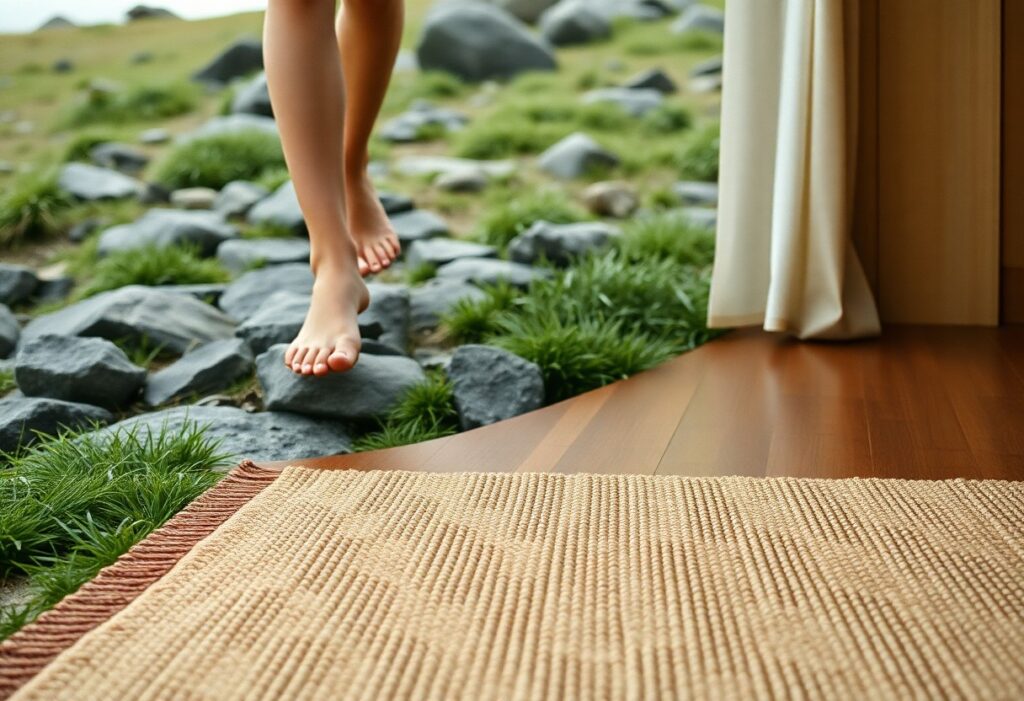
    Bare feet are stepping from a smooth wooden floor onto a grassy, rocky outdoor area. A textured carpet lies on the floor, and large rocks are visible in the background. The scene suggests a transition from indoors to nature.

    Many individuals are unknowingly jeopardizing their foot health in their daily routines. Our feet are intricately designed to interact with a vast array of surfaces; however, contemporary lifestyles frequently restrict them to flat and artificial terrains. Walking barefoot on uneven surfaces can significantly enhance your foot strength, improve your balance, and promote overall well-being. Engaging in outdoor activities such as beach walks and hiking on nature trails provides essential stimulation for your feet. Moreover, incorporating indoor textured mats and balance tools can effectively supplement your daily foot exercise regimen. It’s crucial to gradually ease into this practice, as your feet will require time to adjust to these new activities. By embracing both outdoor and indoor barefoot practices, you can enhance your foot mobility, strengthen intrinsic muscles, and elevate sensory feedback thanks to the numerous nerve endings present in your feet.


    Discover the Transformative Benefits of Walking on Natural Surfaces

    Historically, before the advent of modern flooring options, our ancestors traversed a wide array of natural surfaces, including grass, sand, rocky paths, and soil. These varied terrains provided crucial stimulation that naturally fortified the feet. By consistently interacting with these diverse textures, our feet developed the ability to maintain balance, enhance stability, and heighten sensory awareness—all of which are vital for optimal foot health. Embracing this concept can lead to a significant reawakening of our foot’s natural capabilities, resulting in improved mobility and resilience.

    Unveiling the Evolutionary Journey of Human Feet

    Over millions of years, the human foot has evolved to adeptly navigate uneven terrains. Research indicates that ancient populations who walked barefoot exhibited significantly healthier feet compared to those of modern shoe-wearing individuals. The human foot is a complex structure composed of 26 bones, 33 joints, and over 200,000 nerve endings, all specifically designed for optimal interaction with a variety of natural surfaces. Understanding this evolutionary context underscores the importance of allowing our feet to engage with their natural environment for improved health.

    The Modern Crisis: Impact of Artificial Surfaces on Foot Health

    Living in urban settings predominantly exposes your feet to flat, hard surfaces. In fact, 90% of daily steps are taken on artificial surfaces, such as concrete, tiles, and wooden floors. This limitation severely restricts the natural movement patterns of your feet and diminishes muscle engagement. Consequently, this lack of variety in surface interaction can lead to weakened foot muscles, reduced sensory input, and a decline in balance capabilities. Minimal stimulation from these modern surfaces can contribute to common foot ailments like plantar fasciitis and fallen arches. Regular exposure to textured surfaces can be an effective way to restore natural foot function and enhance overall foot health.

    Transform Your Home into a Foot Fitness Sanctuary

    Transforming any indoor space into a dedicated foot fitness center is attainable with the right tools and equipment. By incorporating textured mats and balance beams, you can create an effective home setup that strengthens your feet, especially when outdoor activities aren’t feasible. This indoor foot training is particularly beneficial during colder months or busy workdays, ensuring your foot health remains a priority regardless of the weather outside, allowing you to stay active and engaged indoors.

    Unlocking the Advantages of Using Textured Mats at Home

    Utilizing textured mats at home offers numerous benefits for your foot health. Regularly walking on these mats leads to greater muscle activation and improved nerve stimulation. Studies have demonstrated that engaging with varied textures can help develop stronger foot muscles and enhance balance, mirroring the benefits observed in populations that frequently walk barefoot. This practice can significantly bridge the gap between indoor and outdoor foot fitness, ensuring that your feet remain strong and responsive regardless of your environment.

    Boost Stability and Coordination Through Balance Beam Exercises

    Balance beams provide a controlled and safe environment for improving stability and coordination. Practicing on a balance beam helps strengthen ankle muscles and enhances proprioception, which is essential for making daily activities easier and minimizing the risk of falls. Additionally, incorporating balance beam exercises into your routine can lead to improved posture and core strength. You can begin with basic walking exercises and gradually progress to more complex movements as your confidence builds. The elevated design of the beam allows you to focus on proper foot placement and body alignment, making it an excellent tool for rehabilitation and preventing foot-related issues.

    Delve into the Scientific Evidence Supporting Barefoot Walking

    Extensive reviews of studies centered on barefoot walking reveal that your feet can become stronger and more flexible through regular exposure to various surfaces. Research indicates a 30% increase in foot muscle activity when walking barefoot on uneven terrain compared to wearing shoes on flat surfaces. This compelling evidence highlights the importance of integrating diverse surfaces into your walking routine to optimize foot health and overall physical performance.

    Insights from Historical Foot Studies Reveal Key Health Benefits

    Research published in 2007 in “The Foot” journal emphasizes that ancient populations without shoes had healthier foot structures compared to modern shoe-wearing individuals. These ancestral movement patterns can greatly benefit your feet, as contemporary studies of barefoot communities indicate they experience lower rates of foot-related problems. Understanding these historical patterns can inspire modern practices that promote better foot health.

    Biomechanical Research Findings: The Case for Textured Surfaces

    Utilizing advanced biomechanical analysis, scientists have discovered that your feet engage more muscle groups when navigating textured surfaces. This engagement results in better balance and stability, while also providing enhanced stimulation to your nerve endings. Recent findings indicate that walking on uneven terrain can increase the mechanical work of your knees and hips by up to 28%. With over 200,000 nerve endings in your feet, interacting with textured surfaces activates these sensory receptors much more effectively than flat surfaces, leading to improved proprioception and overall foot health.


    Maximize Your Foot’s Sensory Benefits with Varied Textures

    Keep your feet engaged and responsive by regularly interacting with a diverse array of textures. With over 200,000 nerve endings in your feet, they act as critical sensors for your body’s interaction with the surrounding environment. Walking barefoot on different surfaces enhances your balance, coordination, and overall foot health. By actively seeking out varied textures, you can foster a deeper connection between your feet and the ground, enhancing your overall physical capabilities.

    Activating Nerve Stimulation for Enhanced Foot Health

    Every step taken on textured surfaces triggers a complex network of neural responses. When you walk barefoot on uneven terrain or textured mats, you stimulate thousands of nerve endings in your feet. This stimulation improves your sensory feedback and can alleviate foot pain and discomfort, fostering a greater sense of well-being and functionality in your daily activities.

    Enhancing Proprioception and Body Awareness Through Texture Interaction

    Approximately 70% of your body’s balance relies on the proper function of the feet. By walking on various surfaces, you enhance your awareness of body position and movement. This practice helps your feet communicate more accurately with your brain regarding ground contact and pressure distribution. As a result, consistent barefoot walking on textured surfaces can improve your stability and decrease the risk of falls. Many individuals notice enhanced balance within weeks of regular practice. Studies indicate that those who frequently engage in barefoot walking on varied surfaces exhibit better spatial awareness and control of movement compared to those who primarily use shoes on flat surfaces.
    Effective Strategies for Implementing Safe Barefoot Training

    To safely embark on your barefoot training journey, it’s crucial to adopt a gradual approach. Start with brief sessions of 5-10 minutes each day, gradually increasing the duration as your feet acclimate to the new routine. Mix indoor and outdoor surfaces, and always inspect the walking areas for potential hazards before stepping out. Designate a specific area in your home with textured mats and identify safe natural spaces outside for your practice, ensuring a secure environment for your feet to thrive.

    Incorporating Daily Barefoot Practice into Your Routine

    Once you have established your safe zones, make barefoot walking a part of your daily activities. Position textured mats in high-traffic areas, such as near your desk or kitchen sink, where you spend significant time. Aim for a total of 30 minutes of daily exposure to various textures, combining indoor mat time and outdoor experiences whenever feasible. This consistent practice will help reinforce the benefits of barefoot walking and ensure your feet remain healthy and strong.

    Adapting Your Barefoot Practice for Seasonal Changes

    Your methods for maintaining foot health should adapt with the changing seasons. In the warmer months, focus on outdoor surfaces such as grass, sand, and pebbles. As temperatures drop, shift your practice indoors, utilizing textured mats and balance beams to maintain foot strength. Regardless of the weather, your feet can maintain their strength and health, allowing you to enjoy year-round benefits.

    Additionally, enhance your indoor routine by creating texture stations throughout your home. Arrange different types of mats in frequently used areas like your kitchen or home office. This strategy ensures consistent foot stimulation, even when access to outdoor spaces is limited, helping keep the 200,000 nerve endings in your feet active and responsive, ultimately improving your overall foot health.

    Selecting the Optimal Equipment for Enhanced Foot Health

    The selection of the right equipment is vital for your journey to better foot health. You should prioritize high-quality textured mats and balance tools that align with your fitness level and available space. When selecting equipment, consider factors such as material durability, surface variety, and ease of cleaning to ensure optimal performance, allowing you to engage in effective foot training.

    Explore Various Mat Types and Their Unique Features

    Feature Description
    Material Non-toxic EVA foam, rubber, or natural materials
    Texture Pattern Varied surfaces (bumps, ridges, waves)
    Size Options Individual pieces or interlocking sets
    Durability High-density materials for longevity
    Maintenance Easy-clean, water-resistant surfaces

    Choosing the right mat should be based on your comfort level and fitness objectives. Experiencing different textures can significantly improve your foot sensitivity and muscle engagement, contributing to overall foot health and performance.

    Utilizing Balance Tools for Enhanced Performance and Strength

    Various types of balance equipment are available, including wooden beams, foam rollers, and stability discs. These tools can be instrumental in enhancing your foot strength and overall balance. Start with basic balance exercises before transitioning to more challenging tools. It’s crucial to progress gradually to prevent injuries and build confidence. Regular use of these tools can aid in developing better posture and stronger feet, contributing to improved physical performance.

    • Wooden balance beams for practicing straight-line walking and enhancing stability
    • Foam rollers for foot massage and balance training
    • Stability discs for dynamic balance exercises that improve coordination
    • Texture mats for enhancing sensory stimulation and foot engagement

    Transform Your Foot Health Through Simple Lifestyle Changes

    By synthesizing the compelling evidence and practical solutions presented, you can significantly enhance your foot health through minor adjustments in your environment. Merging outdoor barefoot walking on natural surfaces with the use of indoor textured mats and balance beams will fortify your feet, enhance your balance, and heighten your sensory awareness. With thousands of nerve endings in your feet requiring regular stimulation, these daily practices can help you achieve that goal. Start with short sessions on textured surfaces and progressively extend your barefoot time as your feet gain strength. These small yet impactful changes will lead to considerable improvements in your overall foot function and health.

    Common Questions About Barefoot Walking and Foot Health

    What is the optimal duration for walking barefoot on uneven terrain each day to promote foot health?

    Begin with 10-15 minutes of barefoot walking daily and gradually extend this to 30 minutes. Start on gentler textures, such as grass or sand, before advancing to more challenging surfaces. Always pay attention to your feet and stop if you experience any discomfort. Consistent daily practice will aid in building foot strength and sensitivity, contributing to better overall foot health.

    How can I safely transition to barefoot walking if I’ve primarily worn supportive shoes?

    Start indoors with textured mats, practicing for 5 minutes at a time. Progress to smoother outdoor surfaces like concrete before trying grass and sand. Always keep shoes nearby during your initial outdoor sessions for safety. Allow your feet 2-3 weeks to adapt to each new type of surface, ensuring a smooth transition to barefoot walking.

    Do indoor textured mats offer the same benefits as barefoot walking outdoors?

    While indoor mats provide specific advantages, they serve best as a complement to outdoor walking. Mats deliver consistent texture for nerve stimulation and muscle engagement, whereas outdoor surfaces offer a wider variety and natural changes that challenge balance and adaptation. For comprehensive foot health, it’s beneficial to utilize both options to maximize the benefits of foot engagement.

    The Article Boost Foot Health: Barefoot Walking on Uneven Terrain Outdoors and Textured Mats Indoors appeared first on My Shoes Finder

    The Article Barefoot Walking: Enhance Foot Health Indoors and Outdoors Was Found On https://limitsofstrategy.com

  • Toe Spring: The Key to Foot Health and Comfort

    Shift your focus to a crucial yet frequently ignored aspect of your footwear – the toe spring. Upon inspecting your shoes, you may observe an upward curve at the toe area, a design characteristic that significantly impacts your foot health more than you may realize. Originally intended to facilitate walking in stiff-soled shoes, research from Harvard indicates that these springs can weaken your foot muscles over time. Without a toe spring, your feet naturally exert more effort, which is essential for sustaining proper muscle strength and function. Gaining insight into this fundamental design feature empowers you to make informed choices for your foot health, as opting for shoes with minimal or no toe spring allows your feet to move as nature intended.


    Master Your Footwear Choices: The Essential Role of Toe Spring

    The toe spring of your shoe is the noticeable upward curve at the shoe’s front, which plays a pivotal role in how your feet operate while walking or running. This design element significantly alters the natural alignment of your toes and impacts your foot mechanics, leading to long-lasting consequences for your overall foot health. By comprehending how this simple feature influences your movement, you can make more educated decisions regarding the types of footwear that promote optimal foot function. Understanding the implications of toe spring not only enhances your comfort but also helps prevent long-term foot issues.

    Identifying the Physical Features of Toe Spring

    The physical attributes of toe spring typically exhibit an upward angle ranging from 15 to 30 degrees from the ground. This elevation creates a mechanical advantage for forward motion, compelling your toes into an unnaturally raised position. The degree of toe spring varies across different shoe categories, with running shoes often featuring the most pronounced curvature. Understanding these physical characteristics helps you appreciate how they affect your foot’s natural alignment and performance during various activities. Recognizing the nuances of toe spring can guide you in selecting footwear that aligns with your lifestyle.

    A Historical Perspective on the Evolution of Toe Spring in Footwear Design

    In the early 20th century, shoe manufacturers began incorporating toe springs as a means to assist individuals in navigating stiff-soled shoes. This design feature quickly became standard in modern footwear, particularly after mass-produced shoes gained popularity in the 1950s. Furthermore, the progression of the toe spring design reflects evolving manufacturing processes and material advancements. However, recent findings from Harvard suggest that toe springs can diminish foot muscle activity by up to 50%, potentially leading to muscle weakness over time. This revelation has prompted many footwear brands to reevaluate their shoe designs, with some now offering zero-drop, flat-soled alternatives that better accommodate natural foot movement, thereby promoting healthier walking patterns.


    Investigating the Biomechanical Impact of Toe Spring on Your Foot Function

    Even minor modifications in shoe design can profoundly influence your foot’s functionality. A toe spring can alter your natural gait pattern by 15-20% and modify how your feet engage with the ground. Such changes may result in reduced sensory feedback and uneven pressure distribution across your foot, which can have cascading effects on your overall body mechanics and posture. Understanding these biomechanical shifts is crucial for anyone looking to improve their foot health and overall physical performance.

    Encouraging Natural Foot Movement: The Importance of Flexibility

    Your toes should naturally flex and move during activities such as walking and running. When wearing shoes equipped with toe springs, your toes remain artificially elevated, hindering their ability to grip the ground effectively. This disruption of normal toe function can lead to a decrease in your balance by up to 25%, limiting your feet’s natural adaptability to various surfaces and terrains. Recognizing this interference is crucial for maintaining optimal foot functionality and encourages a shift toward more accommodating footwear that respects the foot’s natural mechanics.

    Understanding the Impact on Muscle Engagement and Overall Foot Health

    Wearing shoes with toe springs causes your intrinsic foot muscles to engage 40% less than they would in flat shoes. This diminished engagement can contribute to muscle weakness over time, undermining your foot’s natural arch support and stability. The reduced activation of these muscles reverberates throughout your entire kinetic chain. Research indicates that weakened foot muscles can elevate the risk of developing plantar fasciitis by 35%. As a result, your calf muscles, ankles, and knees must compensate for the diminished toe function, potentially triggering a chain reaction of biomechanical adjustments throughout your body. Understanding these dynamics emphasizes the importance of footwear that supports healthy muscle function.

    Key Insights from Recent Scientific Research on Toe Spring

    Recent studies have provided valuable insights into how toe springs impact natural foot mechanics. Research indicates that this ubiquitous shoe feature can alter the way foot muscles operate during walking. Normally, your toes engage with the ground to assist in movement, but a toe spring reduces this essential muscle activation by as much as 40%, underscoring the importance of understanding its implications for foot health. This highlights the need for consumers to be proactive in selecting footwear that promotes muscle activation and overall foot strength.

    Significant Findings from Harvard’s Groundbreaking Study on Foot Mechanics

    Among the pivotal findings from Harvard’s research, which was published in the journal Nature, was the revelation that toe springs significantly diminish the workload of your foot muscles. While it may seem advantageous for your feet to use less energy, this reduction leads to muscle weakness in the long run. The study examined various toe spring angles and demonstrated that even slight upward curves can disrupt natural foot mechanics, necessitating a reevaluation of shoe designs to prioritize foot health. This research serves as a call to action for both consumers and manufacturers to reconsider traditional footwear designs.

    Assessing the Long-Term Consequences of Continued Use of Toe Springs

    The long-term implications of wearing shoes with toe springs are concerning. Regularly wearing such footwear can lead to weakened foot muscles over time, increasing the likelihood of experiencing plantar fasciitis and other foot-related issues. Additionally, your natural toe flexibility and strength may diminish, forcing other parts of your foot to compensate for this loss. Moreover, the consequences extend beyond mere muscle weakness; wearing shoes with toe springs can cause your feet to adapt to this artificial positioning, resulting in a gradual loss of natural gripping ability in your toes. Transitioning to flat, flexible shoes that allow for natural movement can significantly improve foot health and restore essential strength, fostering a more resilient foot structure.


    Analyzing the Footwear Industry’s Approach to Toe Spring

    To fully grasp the significance of toe spring in contemporary footwear, it’s essential to recognize that manufacturers feature this characteristic in over 95% of commercial shoes. Common athletic footwear typically exhibits toe springs ranging from 15 to 30 degrees, which directly influences how your feet interact with the ground during various activities such as walking and running. Understanding this prevalence can help consumers make informed choices about their footwear selections.

    The Justification Behind Traditional Shoe Design Practices

    One of the primary reasons manufacturers incorporate toe springs is to facilitate quicker movement in shoes with rigid soles. This upward curve aids your foot’s natural rolling motion during gait, enhancing the smoothness of each step. However, this design choice reduces foot muscle engagement by up to 40%, potentially contributing to muscle weakness and decreased foot health over time. Awareness of this trade-off can guide consumers toward more supportive and healthier shoe options.

    Current Trends in Footwear Manufacturing: A Shift Toward Healthier Choices

    As growing awareness about foot health has emerged, industry standards are now leaning toward minimal toe springs. The availability of zero-drop shoes featuring flexible soles and reduced toe springs has surged by 300% over the past decade, reflecting a significant shift toward supporting natural foot movement. Innovations in shoe manufacturing demonstrate that flexible materials and anatomical designs can effectively replace traditional toe springs, allowing for a more natural foot positioning while walking. This evolution has resulted in a 25% increase in sales of minimalist footwear options in recent years, showing a promising trend toward better foot health.

    Understanding the Health Implications of Toe Springs for Optimal Foot Function

    The presence of toe springs can dramatically alter the mechanics of your feet, posing potential challenges for your overall foot health. While these curved toe boxes may facilitate easier walking in stiff shoes, they can lead to reduced natural foot function and altered gait patterns. Research from Harvard University indicates that toe springs can decrease toe muscle activation by as much as 50% during walking, which could have significant repercussions for long-term foot health. Being informed about these health implications is crucial for making better footwear choices.

    Identifying Concerns About Muscle Weakness Linked to Toe Springs

    Health professionals caution that habitual use of shoes with toe springs can lead to a weakening of intrinsic foot muscles. Your toes are designed to grip and flex during movement, but toe springs restrict this vital function. Consequently, this diminished muscle engagement can render your feet overly reliant on artificial support, making them less capable of maintaining natural strength and stability. Understanding this reliance is key to preventing future foot complications.

    Common Foot Conditions Associated with Improper Footwear Choices

    Approximately 80% of adults face foot issues stemming from improper footwear choices. The utilization of toe springs has been linked to various foot conditions, including plantar fasciitis, toe deformities, and diminished balance. Natural movement is essential for maintaining proper foot function and preventing these ailments. Foot problems often originate from seemingly innocuous shoe features, such as toe springs. Regularly wearing shoes with pronounced toe springs can lead to decreased toe flexibility, weakened arch support, and compromised foot mechanics. To avert these complications, it’s crucial to select shoes that allow for natural foot movement, preferably those with minimal or no toe spring.

    Discovering Healthier Footwear Alternatives for Better Foot Wellness

    Many individuals are seeking alternatives to traditional footwear featuring toe springs. Your path to healthier feet can include gradual transitions to zero-drop shoes, which enable your feet to regain their natural strength and flexibility. The shift doesn’t need to be abrupt – adapting your footwear choices based on your comfort and activity levels is key to a successful transition. This gradual shift can help ease the discomfort that often accompanies changing footwear styles.

    Embracing Barefoot-Style Footwear Solutions for Natural Movement

    For promoting natural foot movement, consider minimalist shoes that feature zero toe springs and flexible soles. These options encourage proper toe splay and enhanced muscle engagement, allowing your feet to function as nature intended. Typically, these shoes boast a wide toe box and thin, flexible soles that provide you with the sensation of feeling the ground beneath your feet, fostering a deeper connection to your environment. This connection can enhance your overall balance and foot health.

    Effective Strategies for Transitioning to Healthier Footwear Choices

    Research indicates that about 80% of individuals benefit from a gradual transition to zero-drop shoes. You can initiate this journey with footwear that has minimal toe spring and moderate cushioning. This approach offers a balance between conventional and barefoot-style shoes, helping to prevent discomfort during the adjustment period. Transitioning gradually allows your foot muscles to strengthen and adapt effectively to the changes.

    Most people require 4-8 weeks to acclimate to footwear with minimal toe springs. Your feet will need time to strengthen muscles that have been underutilized. During this adjustment phase, you may experience some muscle soreness as your feet adapt to new movement dynamics. Begin by wearing transitional shoes for 1-2 hours daily, gradually increasing the duration as your feet become more accustomed to their new functional patterns. This careful approach can help mitigate discomfort and encourage a smoother transition.

    Understanding the Significance of Thoughtful Footwear Choices

    Your choice of footwear, particularly regarding toe spring, profoundly influences your foot health. It’s essential to recognize that while toe springs may facilitate walking in rigid shoes, they can lead to a gradual weakening of your foot muscles over time. Opting for flat, flexible shoes that promote natural movement is the best course of action. When you wear shoes devoid of toe springs, your foot muscles remain engaged and strong, thereby reducing your risk of developing foot problems. You can begin with minimal-toe spring footwear as you transition to completely flat options, but remember that the ultimate goal is to allow your feet to function as nature intended.

    Addressing Common Questions About Toe Spring in Footwear

    What is toe spring in shoes, and how can I recognize it?

    A toe spring refers to the upward curve at the front of a shoe’s sole. You can identify it by placing the shoe on a flat surface; if the toe area curves upward and does not make contact with the ground, that indicates a toe spring. This feature is prevalent in running shoes and athletic sneakers but is less common in barefoot-style footwear. Being aware of this characteristic can help you make better footwear choices.

    How does a toe spring influence foot muscle function?

    Research from Harvard demonstrates that toe springs diminish foot muscle activity during walking. This decreased muscle engagement can lead to weakened foot muscles over time. Such weakness can manifest in problems like plantar fasciitis, as other components of the foot must work harder to compensate for the impaired muscles. Understanding this relationship is crucial for anyone considering their long-term foot health.

    Are shoes without toe springs more beneficial for foot health?

    Flat, flexible shoes that lack toe springs facilitate natural movement and support stronger foot muscles. While even flat shoes may develop a slight curve with regular use, this natural wear is distinct from the rigid toe springs built into many shoes. Footwear without toe springs can help maintain foot strength and lower the risk of common foot ailments, emphasizing the importance of making informed footwear choices.

    The Article Toe Spring: Understanding Its Importance for Your Feet Was Found On https://limitsofstrategy.com

  • What Exactly Is An Athlete’s Foot – What Are The Indications

    What Exactly Is An Athlete’s Foot – What Are The Indications

    What Exactly Is An Athlete’s Foot – What Are The Indications

    What Exactly Is An Athlete’s Foot – What Are The Indications: An athlete’s foot, commonly known as tinea pedis, is an infectious fungal infection of the skin on the feet.

    It can also infect the toes and hands. An athlete’s foot is a fungal illness that is frequent among athletes.

    An athlete’s foot is not a severe condition, but it can be challenging to treat. If you have diabetes or a weaker immune system and fear you have an athlete’s foot, consult your doctor as soon as possible.

    What exactly causes an athlete’s foot?

    You have an athlete’s foot when the tinea fungus spreads on your feet. You can catch the fungus from an infected person or from touching contaminated surfaces if you come into contact with either.

    Warm, damp surroundings are ideal for the fungus. It can be found in showers, locker rooms, and near swimming pools.

    what exactly is an athletes foot

    ahm articles

    Who is susceptible to an athlete’s foot?

    Anyone can get an athlete’s foot, but some actions make it more likely. Athlete’s foot is made more likely by the following factors:

    Barefoot walking in public spaces, including locker rooms, showers, and swimming pools

    sharing infected person’s socks, shoes, or towels

    putting on tight, closed shoes

    having damp feet for an extended period

    having perspiring feet

    a little skin or nail injury on your foot

    What are the indications and symptoms of an athlete’s foot?

    Athlete’s foot can cause a variety of symptoms, including:

    The soles of the feet or the space between the toes itches, stings, and burns.

    Itchy blisters on the feet, cracked and peeling skin, particularly between the toes and the soles.

    dry skin on the feet’s soles or sides

    Rough foot skin

    Toenails that are discoloured, thick, and crumbling

    detachable toenails from the nail bed

    How is the athlete’s foot identified?

    An athlete’s foot can be diagnosed by a doctor based on symptoms. If unsure that a fungal infection is causing the symptoms, he may order a skin test.

    The most common test for an athlete’s foot is a potassium hydroxide examination of the skin lesion. A small patch of contaminated skin is scraped and placed in potassium hydroxide by the doctor.

    The KOH kills the normal cells while leaving the fungal cells alone, making them visible under a microscope.

    What is the treatment for an athlete’s foot?

    Over-the-counter antifungal medicines are frequently used to treat athletes’ feet.

    If over-the-counter medications are ineffective, your doctor may prescribe topical or oral antifungals.

    Your doctor may also advise you to treat the infection at home.

    Over-the-counter pharmaceuticals

    There are numerous over-the-counter topical antifungals available, including:

    Miconazole (Desenex) (Desenex)

    Terbinafine (Lamisil AT) (Lamisil AT)

    Clotrimazole (Lotrimin AF) (Lotrimin AF)

    butenafine (Lotrimin Ultra) (Lotrimin Ultra)

    Tolnaftate (Tinactin) (Tinactin)

    feet

    Prescription medications

    Prescription treatments for athlete’s foot that your doctor may prescribe include:

    Clotrimazole or miconazole topical prescription

    Antifungal medications taken orally, such as itraconazole (Sporanox), fluconazole (Diflucan), or prescription terbinafine (Lamisil)

    Topical steroid medicines are used to treat painful inflammation.

    Oral antibiotics may be prescribed if bacterial infections occur due to rough skin and blisters.

    Home health care

    To dry the blisters, your doctor may advise you to soak your feet in salt water or diluted vinegar.

    Alternative medicine

    Alternative medicine practitioners have had some success treating athletes’ feet with tea tree oil.

    According to a 2002 study, a 50% tea tree oil solution effectively healed athletes’ feet in 64% of study participants (trusted source).

    Consult your doctor about whether a tea tree oil remedy can assist an athlete’s foot. In certain people, tea tree oil can induce contact dermatitis.

    Complications

    In some circumstances, an athlete’s foot might cause difficulties. Mild complications include an allergic reaction to the fungus, resulting in blisters on the feet or hands.

    It is also conceivable that the fungal infection will reappear following treatment.

    If a secondary bacterial infection develops, it might lead to more severe consequences.

    Your foot may be swollen, painful, and heated in this scenario. Other symptoms of a bacterial infection include pus, discharge, and fever.

    The bacterial infection could potentially spread to the lymphatic system.

    A skin infection can spread to the lymphatic system or lymph nodes.

    Long-term Prospects

    Infections of the athlete’s foot can be mild or severe. Some heal rapidly, while others are chronic.

    The antifungal medication works successfully for athlete foot infections. However, fungal infections can be challenging to treat.

    Long-term antifungal medicine treatment may be required to prevent athlete foot infections from recurring.

    Prevention

    There are various things you can take to avoid athlete’s foot infections:

    Every day, wash your feet with soap and water and carefully dry them, paying specific attention to the spaces between your toes.

    It is recommended to wash socks, bed linens, and towels in water at least 60 degrees Celsius. Most cases of athlete’s foot should be treated by washing socks and using over-the-counter antifungals.

    Disinfect your shoes with disinfectant wipes or sprays (such as Clorox wipes).

    Apply antifungal powder to your feet daily.

    Share no socks, shoes, or towels with others.

    Wear sandals in public restrooms, showers, and swimming pools.

    Wear breathable socks made of cotton or wool, or synthetic fibres that wick moisture away from your skin.

    When your feet sweat, change your socks.

    At home, stroll barefoot to allow your feet to breathe.

    Shoes made of breathable materials should be worn.

    Alternate between two pairs of shoes, using each pair every other day to allow your shoes to dry between usage.

    The fungus will be able to develop because of the wetness.

    The post What Exactly Is An Athlete’s Foot – What Are The Indications appeared first on https://gqcentral.co.uk

  • Foot Troubles and How to Deal with Them

    Foot Troubles and How to Deal with Them

    Foot Troubles and How to Deal with Them

    Foot Troubles And How To Deal With Them: Your feet are subjected to a considerable deal of wear and tear every day.

    Assist them by detecting and treating problems such as corns and calluses, as well as athletes’ feet and hammertoes.

    To hold all the moving components together, the human foot has 26 bones, 33 joints, and over 100 muscles, ligaments, and tendons made of solid fibrous tissue, not to mention sweat glands found nowhere else in the body.

    Every day, your foot is an evolutionary marvel, capable of withstanding hundreds of tons of force – your weight in action. The foot’s multiple components, including the toes, heel, and ball of the foot, all work together to transfer you from one point to another.

    However, the strain of moving about puts your feet at a greater danger of injury than any other part of your body. Hammertoes, blisters, bunions, corns and calluses, claw and hammertoes, ingrown toenails, toenail fungus, and athlete’s foot can all be caused by carelessness, ill-fitting shoes, and normal wear and tear.

    Foot pain is sometimes the first sign of a more serious issue. Gout, for example, typically begins in the ankles.

    So, how can you identify and manage common foot health issues?

    foot troubles and how to deal with them

    The Athlete’s Foot

    A fungus that thrives in warm, dark, wet environments produces an athlete’s foot. It commonly affects the areas between the toes and the soles of the feet.

    It can cause skin irritation as well as a white, scaly rash with a red center. Athletes’ foot symptoms include itching, burning, peeling, and a slight odor.

    Athlete’s foot (also known as tinea pedis) can be avoided by keeping your feet and toes clean and dry, changing your shoes and socks on a regular basis, and never walking barefoot in public locker rooms or showers.

    According to Penn Medicine, over-the-counter antifungal medicines or sprays can be used to cure athlete’s foot, and sprays and powders can be used in shoes to eliminate any residual fungus.

    If none of these options work, you may need to consult a doctor regarding prescription medicines.

    If the infection is not treated, it can spread to other parts of the body, according to Penn Medicine.

    Sharing flooring, gym mats, towels, and other surfaces are also options.

    foot problems

    Hammertoes

    When your second, third, or fourth toes are crossed, bent in the middle of the toe joint, or bent at an odd angle, you have hammertoe. Shoes play an insignificant role in the development of hammertoes.

    If your toe is still flexible, your doctor may suggest you to wear more roomy, comfortable shoes. Wearing insoles or foot pads may also aid with toe realignment.

    Blisters

    Wearing the proper shoes and socks will help you avoid foot blisters, which are soft pockets of skin filled with clear fluid. If blisters form, it is advisable to let them burst open naturally rather than allowing them to rupture on their own, even if they are painful and make walking difficult.

    Wrap a bandage around a blister and wait for it to pop on its own. If the blister has popped, apply an antibiotic ointment and a bandage to aid healing and prevent infection, but keep the area covered to reduce friction and prevent it from forming again.

    If you have diabetes or another condition that puts you at risk of infection, do not treat skin blisters on your own.

    Encrustation of the Toes

    To avoid ingrown toenails, keep your toes straight and not too short. If you don’t cut them straight, the corners or sides of the nail may dig into the skin, causing pain and, in rare cases, infection (called paronychia).

    Ingrown toenails can also be caused by shoes that squeeze the toes and unusually curved toenails.

    To assist an ingrown toenail to grow up and away from the skin, soak it in warm water for 15 to 20 minutes several times a day and apply a small piece of cotton or dental floss beneath the ingrown nail edge.

    If home remedies do not work, or if you have diabetes or another cause of restricted blood supply to your toes, consult a doctor who can remove or elevate the damaged nail and apply a topical antibiotic to prevent infection.

    the rellief you need is right here

    Fungus on the Toes

    Toenail fungus can cause nails to become discolored and deformed. It is possible that it will spread to additional nails, including fingernails.

    Toenail fungus is commonly caused by nail injuries that disturb the nail-skin junction, or the point at which the nail joins the skin of the toe.

    This can happen after a pedicure, as a result of ill-fitting shoes, or as a result of repetitive damage while running or walking that elevates or depresses the nail.

    Toenail fungus is caused by a fungus that loves the skin, hair, and nails. The fungus is attracted to the proteins in the nail bed, and the toenail is ideal since it spends the majority of the day in a damp and warm environment—in your shoes.

    Toenail fungus is tough to treat since it usually returns after effective treatment. Because over-the-counter medications are unlikely to be effective, you should speak with your doctor about getting a prescription antifungal.

    If the treatment fails, surgery to repair the damage that caused the fungus may be required.

    The post Foot Troubles and How to Deal with Them appeared first on https://gqcentral.co.uk